

Kuala Lumpur
Sarapan is breakfast. Makan Tengah Hari is lunch. Makan Malam is dinner. Minum is drink. And coffee is… not quite so simple. This is all you need to know to conquer the heat and hangovers of a binge in KL, Malaysia’s capital city.

Published in Standart Issue 44
The Malaysian heat rouses you before the light does. The city, slow to remember what year it is at this time of day, awakens to the throaty, sleazy call of a cockerel, the whirring of mourning doves, and car horns honking like in a Saturday-morning cartoon. You jolt upright, with a thin film of sweat covering your body, and brace yourself for the glare of the day.
As I dress, my thoughts drift to Sir Frank Swettenham, one of Malaysia’s former Resident-Generals. He once recounted how local Malays would mutter as he passed in his pith helmet, Arrow collar, and woollen dinner-suit trousers: ‘Lord Swettenham must be powerful if he can wear all that in this heat.’
I, regrettably, am not a powerful woman. I choose something suitably diaphanous and slip into a Grab car for a full day out. The taxi smells conspicuously of ‘new car’, and the driver glances at me in the rear-view mirror, one bloodshot eye winking into a red half-moon as he grins. I smile back. He disappears behind a curtain of wooden beads, designed to promote blood flow, that jangle against the seat. On the next turn, a rattan tissue box skids across the parcel shelf, bumping my sweaty head. Ah, home.

Upon our arrival at the restaurant, he gives an almost comical look at the clock and sucks his lower lip. I instinctively know the only reason he isn’t smoking a cigarette is my presence in the car. ‘It’s almost 11,’ he declares in shock as he pulls up to the breakfast place. ‘Have you not eaten yet?!’
‘Dah makan dah?’—‘Have you eaten yet?’—is the rallying cry of every Malay. While every country enjoys food, Malays elevate it to a competition. I hop from the taxi into Nasi Lemak Burung Hantu and catch the wriggling flame of a lighter in the rear-view mirror before the driver departs.
Sarapan
Still practically perspiring plane sweat, my first proper morning in Malaysia demands my first proper breakfast. Nasi Lemak Burung Hantu, translated literally as ‘rice fatty ghost bird’, or less literally as ‘the coconut rice owl’ and symbolizing God knows what is famous for serving the best version of nasi lemak, one of Malaysia’s national dishes. A pyramidal offering of rice cooked in coconut cream is surrounded by satellite-dollops of spicy-sweet sambal, fried anchovies, crispy roasted peanuts, a severely hard boiled egg, and a few cursory slices of coconut. I order the one with extra-crispy chicken on the side. Bliss.

The lurid green tables and chairs, shaped like every piece of garden furniture I have ever seen, creak slightly under my weight—a pleasingly familiar sound. I wonder how the larger woman at the next table is supported; her chair legs splay like a stressed spider. She is a formidable, wall-like presence, with one arm suspended above her plate. With a five-petalled flower of fingertips, she presses her hand into the rice, peanuts, anchovies, and spicy sambal, gathering a gentle pinch. She ferries the food from table to mouth in this way, swiping and mixing the sauces into the rice until it forms just the right texture and viscosity, before daintily placing it against her lips. Her fingers part with the delicacy of a kiss, and she reaches down to eat again.
This is makan pakai tangan, or eating with hands. All Malay food, they say, tastes better this way. I watch her and attempt it myself, but the motions are unfamiliar. The rice is too sloppy and slides from my fingers; juggling the fried chicken with my fingertips is too tricky. I feel like Aesop’s stork, pickaxing the plate. Dejectedly, I ask for a fork and spoon, then shovel the food into my mouth, exhausted by my labour. It still tastes good.


The coffee, known as kopi, arrives with the cutlery, thick and brown. Traditionally brewed from acrid robusta beans, it’s poured over a sedimentary layer of condensed milk and sparkling sugar. An old man, whose fingertips have long since burnt off, mixes it with a clattering teaspoon. He shoves it towards a young waiter with a surly expression, who practically throws the coffee towards me, where it spins in a fluted glass with a chunky handle, almost pint-of-stout-like with its head of creamy, foamy sugar. I sip it. It’s like gasoline, if gasoline could love me back.
I get up not long after, the rich food still too much for me on only a few hours of stolen sleep. I leave my plate as my mother taught me: all the food piled and scraped into the centre, leaving the edges clean. The half-lidded eye of an egg yolk stares up at me from the plate, and I nudge it so it’s dead-centre. I’m not sure why those are the rules, I consider while placing the cutlery on the plate. They just are.
As I watch, the woman at the table across from me orders her second kopi, with extra condensed milk. She sips the remaining dregs of her first, little finger extended, hands conspicuously clean, and waits with placid dignity for the new one to arrive.

Makan Tengah Hari
I wander around Kampung Baru, a village nestled in the heart of Kuala Lumpur. In the last 60 years, Malaysia has experienced rapid expansion, growing upwards as much as outwards. The city-centre buildings, wrapped in fish-scale chrome and glass, claw at the cloud layers, reminding me of the meaning of the word ‘skyscraper’.
Despite this growth, the inhabitants of Kampung Baru have managed to prevent their land from being taken over, continuing to live in the traditional kampung houses of pre-industrial Malaysia. Squat, square, and painted in dazzling yellow, green, and hot lurid cyan, they are superimposed against the skyline like foothills. Intricately carved, marzipan-esque eaves drip from the roofs, and the sounds of the village swell around me: barking dogs, baying motorbikes, the crunch of betel nuts against teeth.


I go for lunch at Chunburi, a restaurant serving food from the quasi-Thai region of northern Malaysia. I order thick tuna curry and steamed fenugreek rice, violently black and fibrous beef rendang, and pale ligaments of fish in soft green turmeric. They pour a collection of sauces over a mountain of white rice, creating a snow-cone of flavour and bleeding colour. I am slightly better at eating this with my hands, but the waitress sees me and provides cutlery anyway. I am only mildly insulted as I brush the cutlery aside, pointedly choosing not to use it. She watches me do this. I feel as though we have bonded in this moment, but I sense she may not think the same.
‘In the last 60 years, Malaysia has experienced rapid expansion, growing upwards as much as outwards. The city-centre buildings, wrapped in fish-scale chrome and glass, claw at the cloud layers.’
As I eat on the veranda, away from the intense winds of the industrial ceiling fans, I observe the comings and goings of the village. A young boy prowls the dusty road, crouching under the houses, searching for something. I don’t know what. His legs jut out from the wide openings of his shorts, and his singlet is askew on his shoulders, baring the xylophone of his chest. When he pops up from under the third house, he is holding something in his hand—a kitten, its eyes still glued shut. He grins, seemingly at me, revealing the absence of his two front teeth.

The exhaustion and heat start to get to me, as I wander this old heritage district in search of any form of coffee that isn’t a kopi. Suka Ngirup rescues me. Housed in the back entrance of a vintage shop, their walls are tiled, their doors are grilled, and the music of P. Ramlee saunters through an old-time radio. I order a shot of espresso poured over thick palm sugar, or gula merah. It’s sweeter than refined sugar, and deeper, coating your mouth with a strange and glorious mire. Mixed with milk and coffee, it’s perfect for a hot afternoon. It’s made with robusta, the barista tells me, and I try not to be disappointed. Robusta has been used for years in Southeast Asia, unlike the Arabica that is the darling of afficionados the world over. Higher in caffeine content and packing more of an acrid wallop than the refined Arabica, robusta has been the bean du jour hereabouts ever since blight eradicated most of the arabica orchards in the 1800s.
I am on the hunt for the rarer and more secretive variety, liberica. Making up less than two per cent of the world’s coffee production, it is a strange and unknown country. It apparently packs a thumping punch, with aftershocks of jackfruit. I make it my mission to try it at least one during my break here.


A group of trendy kids take photos by the old film posters. I know they’re trendy because they’re wearing flares and bandanas around their necks, with hair curling in the heat. I ask them why they are drinking coffee here, for 13 ringgit, when a kopi at a regular kopitiam costs less than four.
‘Aiya,’ says one of the boys, inexplicably clad in double denim despite the weather. ‘Kopi di sini adalah vibes.’
The coffee here indeed has ‘vibes’. P. Ramlee and Saloma seem to play a little louder.
Makan Malam
Not far from Kampung Baru lies Chow Kit. When I mentioned this destination to my mother, she pressed cash into my palm and urged caution. In her day, it was a cowboy town, Kuala Lumpur’s seedy red-light district, immortalized in the Melayu-disko anthem of the same name. In the ’80s, there was a famous shooting spree there, a golf caddy allegedly going berserk and shooting up a petrol station. The police didn’t even patrol the streets. Why bother?
‘I have a Borneo negroni with pineapple instead of Campari, shared mouthfuls of kaffir lime tequilas, something Sazerac-y with elderflower and jambu-jambu, and a kopi-style espresso martini. I distantly recall that I haven’t had much water today.’

The night market is just beginning to set up. Trestle tables are strung with lights, and multicoloured umbrellas cast stained light across the narrow paths between hawkers. An old man, with a ring on every finger, gestures expectantly like a priest of the patisserie, demanding I buy one of his fresh, glistening boxes of kuih—gelatinous Malay sweets made from rice flour and pandan. Around his waist is an intricately tied sarong chequered in purple and white. Gingham, I was taught, is actually a Malay word, genggang, transported via the Dutch gingang. The French claim invention in the town of Guingamp, but of course they would.
A handful of words have entered English through Malay: bamboo, cockatoo, caddy (as in tea or tool). When Western children ‘run amok’, it originates from the Malay word for intense, frenzied homicidal rage.
Generators fizz as I navigate the market’s thin capillaries, squeezing between signboards, tables, awnings, and crowds of stray cats. I try to remember the collective noun for cats, or indeed stray cats, but cannot for the heat. Ahead of me, a woman holds up traffic, trawling with her red-wire grandma trolly that is barely small enough to fit through the gaps. She stops to chat with everyone she recognizes—which seems to be everyone—squeezing fruits and negotiating prices for items she never seemed interested in buying in the first place. The wind fiddles with the edges of her hijab, making it ripple. She pays for a see-through plastic bag bulging with freshly fried sardine puffs and bites into one. Catching me staring, she smiles. Oil stains her teeth’s grouting red. She offers me some of the curry puff.

I’m not sure I can eat much more. I think of the teenagers, hunting for their halal ‘vibes’. I decide I deserve a drink.
Minum
The English celebrity cook and restauranteur Keith Floyd famously failed to stay on the wagon in Malaysia, captured swanning about islands in the Straits, waving bottles of fruit juice, pink punches sloshing in plastic cups. Luckily, a 21st-century development has been the loosening of alcohol laws.
Kiku is a Japanese jazz kissa, or listening bar. Duke Ellington spins lazily on the record player as a beautiful, barely human mantis of a girl scrapes her bowl clean of mentaiko pasta, her fork tight against the bend of the bowl to capture every last drop of spicy cod roe and tagliolini. I order a highball with yuzu peel and slurp it down with gusto.


The menu is half in Japanese, and the other patrons lean over each other, conversing in soft voices. In the corner, a table of women with matching blunt-cut bangs and bright red lips trace cattails across their soft, mood-lit faces. The blinds are pulled tight in regimented slats, but through the rents, I see a group of boys outside, smoking cigarettes and leaning against their motorcycles. One holds his cigarette between his thumb and forefinger, tracing as he talks, dragging dark orange ashes through the air.
Leaving Kiku, I hum the tune to ‘Porgy and Bess’ as I head further into the club scene, toward PS150, a cocktail bar of the highest repute.
This, I consider, is what my mother must have imagined Chow Kit would be like: a Shanghai-swing cocktail bar with dripping red chandeliers, banquettes, women in perilously high heels, and men too good-looking for me to say they ‘leer’ at me. They look at me with respect.
I eventually find myself talking to the young women with the matching hair. They lend me some of their lipstick so that I, too, can match, and soon, the rims of our coupes are ringed with identical shades of red.
I have a Borneo negroni with pineapple instead of Campari, shared mouthfuls of kaffir lime tequilas, something Sazerac-y with elderflower and jambu-jambu, and a kopi-style espresso martini. I distantly recall that I haven’t had much water today.

A sweaty hand presses into mine, and I am pulled onto the dance floor, my mouth still crunching around a grilled bit of baby corn. Hands and knees and elbows and hair and red lipstick go everywhere in the drunken neon night.
‘Run amok,’ I think to myself, watching the girls dance as I chew a bit of well-deserved dehydrated pineapple drink garnish. ‘This is running amok.’
Sarapan (again)
Next morning, or more likely afternoon, I lean over a table, feeling decidedly the worse for wear. The heat collects at the base of my neck and makes me feel, without exaggeration, like I am going to die.
The barista places a coffee down in front of me. It tastes of rallying and a refusal to die. It’s a liberica blend, for which Ghostbird, or burung hantu in Malay, is renowned. I revel in the serendipitous symmetry of my evening, contemplating how such a recurring image would be deemed trite in a short story or travel piece. Another wave of the hangover grips me from behind my eyes.
The barista stops and looks at me. A bandana is tied around his neck, and he hasn’t had nearly enough sleep. ‘You don’t look great,’ he says with typical Malay bluntness as he nudges the menu towards me. ‘Dah makan dah?’
Coffee & Sights


1. Nasi Lemak Burung Hantu
A real local stalwart. Why not try their chilli-fried lungs, prawns with stink-bean, or fried chicken with batter scratchings? Go to the TTDI outlet and wander to Tintabudi bookstore, making sure not to get any sauce on the books.
2. Kiku Kissa
Smooth jazz, fusion food, cocktails. Sit for hours reading, and let the low electric thrill of traffic fade into the sound of the Gerry Mulligan quartet.
3. Artisan Roast TTDI
Pick up a pour-over here before trying one of their local house-milled chocolates. It’s exactly the pick-me-up you need before doing the walk around neighbouring Bukit Kiara, a miniature nature reserve with monkeys and thick, close-cloistered trees in the middle of the city.
4. Chow Kit
Start at Yut Lee, the grand dame of KL kopitiams, or coffee shops. Once awake, head to Chow Kit market, one of Kuala Lumpur’s last traditional wet markets, selling fish, fruit, DVDs, meat, and more. Wander down to Perniagaan Tembikar Yat Hang, a century-old crockery shop with vintage traditional tableware.


5. Kampung Baru
A beautiful little oasis, lodged like a bezoar in Kuala Lumpur’s chrome throat. Before the night market, which has been running since the 1930s, spend your time at Noor Arfa, designing a bespoke batik kebaya or songket.
6. Batu Caves
While, yes, a bit touristy, it’s absolutely not if you go first thing in the morning. The jungle fringes the cliff faces, which in turn fence in multicoloured concrete steps that lead through to a cave complex with a temple hidden inside. Beautiful, bizarre, imposing.
7. Yunshu Coffee
Real coffee and Malay food fusion on a Willy Wonka-esque level. Coffees mixed with syrup, clarified milks, monk fruit reductions, and the Asia-only hooch-inspired, bright green, ectoplasm-like Kickapoo Joy Juice. Feel like Cortez on the peak of Darien, except in terms of coffee flavour combinations.
8. Suka Ngirup
From what I can tell, this is where the coolest people in Kuala Lumpur gather for coffee. Their rings clink against their coffee cups, their fisherman-sandalled feet scrape against the floor, and they’re gossiping about Malaysia’s music scene, the films of Jarman, or, most likely, where to get lunch.


9. 103 Coffee
Grab a coffee at their Desa Park City outlet (I had their ‘Nana Bear’, a yuzu cold brew with a cucumber cold foam, which was as surprising to drink as it was to describe) and then stroll around the waterfront, if it’s not too hot.
3. PS150
Go through the eerie toy shop and push into this speakeasy cocktail bar. Order whatever the bartender wants you to order. Drink it. Order something else. Watch the neon lights blur on the bar top. Have the best night.
11. One Half Roastery
Their Taman Paramount outlet is nestled in an old neighbourhood of KL. In between auto repairs and ancient restaurants are One Half Roastery, an award-winning coffee shop, Psychotic Operator, a wine bar, and Remedy, a cocktail parlour.
Keep reading
The rest of this story is for members. Members get four print issues a year, a coffee with each, every story in the Library, and the Standart Community app.
$5 a monthBilled annually at $60
There is more where this came from
This story was a gift from a member. Members get four print issues a year, a coffee with each, every story in the Library, and can share stories like this one.
$5 a monthBilled annually at $60

City Profile: Los Angeles
Los Angeles resists clean outlines, and its coffee culture lives somewhere between softness and grit.
Sabine Parrish ( text ) &
Damien Maloney ( images )
Know someone who would like this?
Members can give the whole story away.
More Places
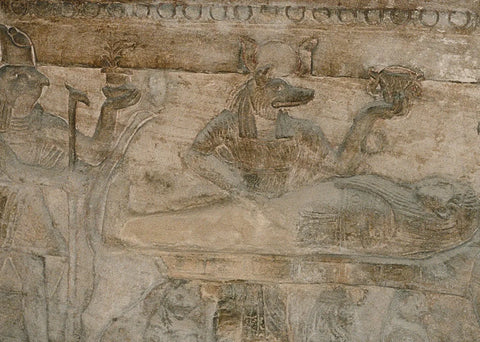
Alexandria
In Alexandria, bride of nostalgia, cafes may be little wormholes through which the tourist travels back in time.
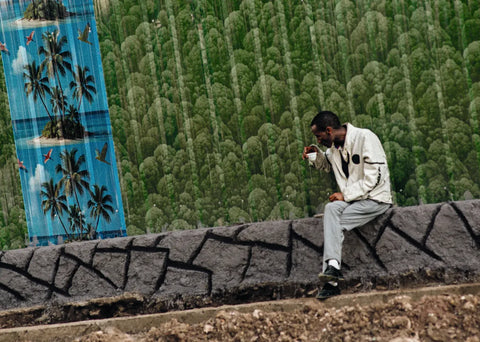
Public Consumption: Addis Ababa
Ethiopia is the birthplace of humanity and Coffea Arabica, giving rise to both our species and the coffee that would shape…

Mochas & Moguls: A Snow-borne Sojourn to the Sunrise Land
Blue-sky ski days to negroni nights, Hakuba is a 24-hour town hidden in the Japanese highlands.
Also in Issue 44
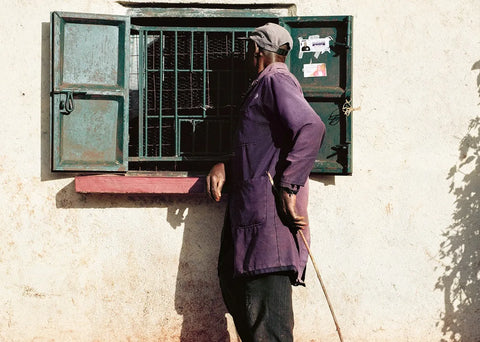
Rewriting Value
Kenyan coffee is world-class; the system that sells it was built by people who believed Kenyans shouldn’t grow it.
What Do You Taste?
Specialty coffee conquered Prague years ago; keeping it conquered is Ondra Štökl’s job.
¿Pero por qué Pacamara?
I’ll never forget my first time roasting a pacamara.
Favourite stories
Jaime Hayon
Aside from bridging the gap between artist and designer with installations in some of the world’s most auspicious locations, Spanish artist…
City Profile: Venice
Slowly sinking under the weight of more beauty than can be consumed locally, Venice is less a museum than a gorgeous,…
Long Live Decaf!
Decaffeinated coffee is experiencing unprecedented popularity.
Share the storyGive this story to a friend
Your friend can read the whole story.
Your friend can read the opening of the story. Members can give the whole story away. Become a member
Your friend can read the opening of the story.
As a member you can share any story in full. Your friend reads all of it, free, for seven days. No account needed.
Sarapan is breakfast. Makan Tengah Hari is lunch. Makan Malam is dinner. Minum is drink. And coffee is… not quite so simple.
Share to your Instagram story
Your link is copied. Add this picture to your story, then choose the Link sticker and paste.