

Alexandria
In Alexandria, bride of nostalgia, cafes may be little wormholes through which the tourist travels back in time. Your correspondent steps inside the sepia photo and looks around. Was Alexandria a cheery cosmopolitan wonderland? Or a playground for foreign hedonists and freeloaders? Or, perhaps, was that dreamy old Alexandria only ever just a dream? We look for an answer in the city’s cafes.

Published in Standart Issue 44
You can judge a city by the quality of its clichés. The bosky boulevards of Paris are chic. London’s parks and stiff stuccoed fronts are grand. The riparian maze of Venice glitters. In Istanbul, East and West shake hands. Alexandria has its share: cosmopolitan, elegant, glamorous, literary, royal, Greek. What is interesting about Alexandria, however, is that the clichés are dead. As toppled as its lighthouse. The temptation is to rage against this death, something like as follows:
‘It is the stubbed-out butt of a cigar, a great novel’s postscript written for cash by an author turned gaga, the gluey residue of a coffee left to congeal in the sun! It is Paris stripped of its boulevards, London denuded of its parks, Manhattan divested of skyscrapers, Istanbul relocated from the Bosphorus, and Venice paved over! Other cities slowly drift out of their moments of riches and influence into long elegant dotages, and with respectable seniority run down the store of riches and prestige gathered in their vigorous prime. Not Alexandria. She was daggered through the shoulder blades in the flower of her years, her beauties appropriated, spoilt, and flogged, her sinews left on the pavement to grow putrid!’

Café de la Paix is the perfect setting for these and suchlike ruminations. Founded in 1934, it occupies an enviable corner of the corniche, on the ground floor of a marvellously weird, faux-oriental Art Deco building. Inside a gaping interior, wonky chandeliers half-heartedly illuminate peeling paintwork and chipped stucco cornices. Solitary men lurk in the gloom, miserably suckling on their hookah pipes and scrolling TikTok. A few televisions joylessly issue Quranic recitation. Grimy plastic plants huddle around PVC tables. I have no idea why the place hasn’t yet folded; when it does, I will be relieved. It is a reminder of the worst that can happen when historic places fall into the hands of the tasteless and unambitious. Weirdly, though, the coffee was good. I advise readers to, after a quick leer inside, dart outside to enjoy over a coffee the view of where the lighthouse once stood, and to meditate upon what once was.
But what was this much-lamented heyday? Well, it has many layers. Alexandria starts with a spectacular career in the ancient world. Then it lies fallow for a millennium or so. From the early 19th century through to the mid-20th, Greeks, Armenians, Jews, Syrians, and many others from Ottoman lands arrived as refugees or fortune hunters. This is the Ottoman layer. Then the Khedive Ismail, leader of Egypt from 1863–79, sponsored European buildings to make Egypt ‘modern’, and to attract foreign investment and immigration. This bequeathed its remarkable architectural heritage. But he also opened the door to British domination. By the turn of the century, the Brits were in control of Egypt. And so, with the arrival en masse of Europeans, we layer over colonialism.

Then add the royal one: Egypt was a sort-of-monarchy through this period, with Alexandria hosting the court and parliament during the summer months. Citizens, shop signs, and cinemas were multilingual, miscegenation rife, and all races lived in mushy harmony. Parties lasted late into the night (but there were no hangovers). In the day, brown hands clasped white and olive ones, and citizens skipped down the street singing in tight 12-part harmony, with the Brits conducting and the beaming Egyptian masses applauding through tears of joy.
And what was the fall? In 1952 the villainous Nasser arrived. He snatched away all the elegant palaces, gave all the champagne to his slobbering cronies, and slammed down Soviet cement over the European stucco. Most lethally, starting in 1956, he gave the boot to the Greek, Jewish, Armenian, and European Alexandrians. They took the clichés with them in their suitcases. It happened in a rush, then slowly: the Jews were given only a few days to leave, the Greeks a few years. But in a decade, they were all but vanished. And now the city lies in the grimy hands of kleptocrats, philistines, and, worst of all, Egyptians.
So the story goes—and it’s a superficially compelling one. A certain kind of glum lover of the past sees in Alexandria an invitation to inspect a smashed shell. Now I would not even deny that there is a coffee bean of truth in all this. But there is a lot of nonsense too, and it is important to sort the sheep from the goats.

Alexandria is a city of many strands. So much the better for nostalgists, since each—the European, Ottoman, colonial, royal, and cosmopolitan—may be the fitting subject for lament. Take Lawrence Durrell, whose famous Alexandria Quartet (1957–60) is set in just this cosmopolitan dreamland. In his work, the city itself becomes an odalisque, almost as if it were one of the prostitutes he—how to put it?—so assiduously describes.
Writing of postlapsarian Alexandria in 1982, however, Durrell thundered, ‘It is particularly exasperating to find that all the medicaments in the chemists are now known by Arabic names.’ The key to understanding this extraordinary statement lies in the same essay—‘I was rootless by background and inheritance—a colonial.’ Durrell was really raging against the passing of a world in which ‘colonial’ could unironically be used as a label for an identity. Alexandria, for its part, provided him with the perfect stage on which to strike that attitude.
Another famous English visitor, E. M. Forster, was stationed in Alexandria during the Great War, and ended up writing a history-cum-guidebook of the city. Yet even at the crest of his country’s power and the city’s glamour, he writes in minor key. For Forster, Alexandria’s heyday was in fact in Greek antiquity, around 250 BC—‘She started brand new, gleaming white, a calculated marvel of marble,’ he gasps. Then ‘the unattractive figure of Rome’ looms. Better not mention the Arabs, or rather, the ‘Mohammadans’: in Forster’s history, the section ‘The Arab Conquest’ begins ‘We are now approaching the catastrophe.’ Luckily, modern Greek immigrants then sail to the rescue: with a sorcerer’s snap of the fingers, ancient shades into modern, and a plurimillennial interlude disappears into Forster’s handkerchief. For Forster, if you squint and put him in the right wig, Cavafy can pass for Cleopatra. After all, ‘The Alexandrians have never been truly Egyptian’, which is, presumably, what makes them so special.

Read in 2026, Forster’s evocation of a time before grubby modernity which shone with Greek marble and the halos of the Church Fathers reads like an advert for Nasserism. Durrell loved it, obviously, even if his Alex was a sex-drenched orientalist playground.
Now Forster’s book is somewhat less racist than my selective quotation makes it seem, and anyway, it is facile to put the boot into the colonials. Other nostalgias are more homely, more legitimate. I have an elderly Egyptian friend in Cairo, where I live. He is a potsherd of Egypt’s old, smashed elite, still stained deep with the wine of its vanished glamour. I asked him about Alexandria over tea in his immaculate garden. ‘I haven’t been to Alexandria for 50 years,’ he told me. ‘I refuse to see it now when I know how it once was.’ The nostalgia for the court and its trappings is too close, too unbearable. Here the grief for a changed city is really for the dissolution of the conditions which formed him, and the society to which he belongs. Another strand, the royal, provides another occasion to mourn.


But what of this city? What does the modern traveller in Alexandria find? Well, it is certainly a modern Egyptian metropolis—scruffy, vigorous, crowded, hot, noisy, friendly, alarming, funny. If you like Egypt, you’ll like Alexandria. After all, the population in 1798 was about 5,000, at Nasser’s arrival in 1952 about a million, and now it is six million. Such brute demographic change cannot but subsume and overlay.
And so we layer over modernity, in the form of the hipster coffee outlet. Tim’s Coffee, founded last year, is set off from the scrum of the centre but in earshot of it. Here you can find exotic un-Egyptian things such as focaccia, stuffed croissants, and men in shorts. The exposed brick wall and ceiling pipes make for a good facsimile of East London, but with vastly more amenable prices ($1.70 for an espresso). They had every brew of coffee I’d heard of and a few I hadn’t. The eponymous Tim is in fact an Egyptian named Mohammad. How’s that for cosmopolitanism.
But change does not kill history. Alexandria is also more than a Tanta or a Minya (sorry). For one, there’s the architectural heritage. Downtown Alex is a big dirty feast of crumbling palaces, neo-renaissance slabs and soiled orientalizing facades lining wide boulevards. Alex cannot offer the prissy comb-overs of Vienna or Florence. But so much the better. Degeneration is infinitely more appealing to journeyman aesthetes like your correspondent. Long grey stains swirl across the facades, balconies pointlessly contain rubble, black windows betray empty interiors. Wedges of overhanging masonry threaten revenge on those who have neglected them. Leave the centre a little, and you will see a precious palace without one of its walls; spy inside and there is a staircase to nowhere, leading up to a storey which no longer exists. Big Soviet bruisers lurk in the interstices.

My reaction was a familiar paradox. On the one hand, I love Egypt, and I yearn for its people to live the lives of dignity which they deserve. On the other, it is impossible not to aestheticize the decay, to see in it the panache of beauty taken for granted, to admire the spirits of those who battle forward in the nooks of their city’s ruins. It is the anti-Dubai. It is a cash-poor aristocrat whose castle’s wardrobes teem with lacunose cardigans.
Alex is at least alive. Europe’s treasures are mummified corpses wheeled out for the prurient gaze of a paying public. Local life is forever exiled from the old towns of Venice and Ibiza and Santorini. In Alex, I saw tourists only in the old fort, and they were mostly Arabs. Alex is for the traveller, not the tourist. This is another kind of time travel—if you want to know what it was to be a tourist in the 19th century, go there.

And so there are many contenders for the Wormhole award for time-travel opportunities. Take Café Gaber el Kubri, perhaps my choice for an ‘authentic’ (whatever that means) Egyptian cafe experience. It is old but unshowy. In the heart of the city, just off what an estate agent would call the fabulous Uraby Square, it spills through its open French doors and full-length windows into the street. Its crooked wooden awning protrudes over conversations, chess games, and resounding hand-slaps of greeting or mirth. Faded tiles illogically cover random parts of the inner walls and fans spin superfluously overhead. No tourist joint, and unknown to the guidebooks, this is a fine exponent of the genre ‘local Egyptian cafe’. It is un-curated. You sense it has happened to stay the same because on any given day that was easier than changing something. Bravo. The delightful manager claims that nearby Farouk Café, despite its name, is actually from the ’30s and that his is 1920s, so older. Unlike the Farouk, Gaber el Kubri’s age is not advertised, which itself commends it.
Café el Borsa el Tijariya maybe pips it for its sheer grandeur. Distributed over four huge, haphazard quadrants of interlinked rooms, the cafe could seat hundreds. It is almost a living organism: some rooms give onto a noisy street, some debouch onto the seafront, and all share the same air of quiet decadence. Photos of famous Egyptians—writers, politicians, actors, musicians—are taped to the walls. Nasser is interestingly omitted. A central terrace wedged between two buildings gives views upwards onto two gloomy old facades (balconies, fluttering bloomers, wart-like A/C machines). The name means ‘Cafe stock exchange’: brokers from the exchange building nearby, so the story goes, came here to haggle. You still feel as if its high ceilings frame important events—new friendships, first loves, break-ups, conspiracies, business deals of any degree of legality. I chatted to an elderly man who sat and sipped in solitude. ‘Oh it hasn’t changed since the ’70s, this place. The city has of course. In the old days it was clean and people had manners.’ He paused, then added, ‘But it’s still better than Cairo.’


The old man is right that you must work harder these days to find the good stuff. But do not doubt that it is still there. There are some sights: the Graeco-Roman museum is world-class. The catacombs are astonishing. The fort and Pompey’s pillar are worth a visit. There are a few other museums here and there (Cavafy’s, Jewellery). There are some interesting religious buildings. Go for the weekend for these, if you want, then scurry back to your five-star beach resort for a swim and a cocktail (a Cosmopolitan, please).
Such tourists will at least want to visit Trianon, the best upmarket cafe in town—relic of the city’s old cafe culture and an establishment of rare grace. It has been delicately preserved since its foundation in 1905. Its wooden panelling, marbled bar, curtains, and decor ring true. Especially pleasing are the exquisite wood-carved capitals of the columns in the historic tea-room. Mellifluous piano music burbles under its high ceilings, even as its French-made vintage grand piano naps in the corner. Its impressive Art Deco murals are signed Giovanni Tolleri, Firenze. Its waiters are unobtrusive and fragrant. One may also sit on the pavement outside to enjoy the delightful Sa’ad Zaghloul Square, Alexandria’s best, with the 15th-century fort hunkering on the promontory beyond. This is what heritage and love of heritage can do when they team up. The able and committed manager loves his cafe, and told me he hopes to convert it into a museum, so go and drink coffee there while you can.


The more you engage with the city, the more it will give you. Walk around the centre and you will see little betrayals of the past. Notice the Art Deco building with ‘cinema’ etched in Greek on the facade over posters for Egyptian films. Pause at the enclosure of a church and see the marble notice recording in Greek the parish’s losses in the Great War. I did, and I saw the glum Egyptian guardsman facing it too. He had sat facing it every day for a decade without any idea of what it said. He was thrilled when I translated it for him. This is contemporary Alex. If you look hard enough, you have the sense that it is one civilization living in another’s skin. It’s a little itchy, but they know it makes them special. And there is no better way to appreciate this than through the city’s cafes. Many founded by Greeks still survive under Egyptian management. Most have even kept the original Greek name. Quizzed on this by a nosey foreigner, the managers all brighten with pride.
Take Athineos, its Greek name intact—another early 20th-century foundation. A curious place, conscious both of its own decline and of its inability to arrest it. The underground cafe/bar downstairs is shabby and dull. The restaurant upstairs, with the sea view, is more appealing. It self-consciously displays photographs of times past on the walls, like a grandmother showing off dog-eared pictures of her and grandad on their wedding day. Its current decor, of ivory plastic surfaces, over-lit booths, and laminated menus, jars. Residents of Dubai will feel immediately at home. I enquired about the poster of the Egyptian royal family in the entrance hall. ‘Those were the times when a prince knew he was a prince, a minister a minister, and a poor man poor. They knew it and accepted it,’ remarked the philosophical restaurant manager. ‘Not like now. It’s all mixed up like a salad, and no one knows who they are.’ The manager’s essentialist worldview, at least, remains a gleaming period piece.

Now compare and contrast Sofianopoulos. This is the place for vintage-loving coffee nerds. Every inch of the walls is festooned with coffee in long, labelled, glass cylinders. Sealed bags of coffee ground and unground (and hilba, bunduq, and sahlab, whatever those are) bedeck every surface. Here coffee is both a drink and an adornment. Founded by Greeks in 1908, it was bought by an Egyptian family in the 1930s. The glory of the cafe is a huge 1950s grinder which chugs obediently in the background. Note the old-school 1940s rotary-dial telephone and the bizarre statue of an Ethiopian holding a torch, hoisted aloft behind the till.
That, in miniature, is my recommended approach to Alexandria: to savour the city for what it is as well as what it was. The city still has intellectuals and writers and artists, they’re just Egyptian nowadays. Why not go to a concert at the Jesuit Cultural Centre (run by Catholics, with a Sudanese refugee event manager) or visit Shelter Art Space to see some local artists? Durrell’s Justine, despite its faults, is worth reading, but so are Naguib Mahfouz and Ibrahim Abdel Meguid.

Then again, we freight cities with the meanings we need. To mourn a city’s change is after all to mourn a private disaster in disguise. For my friend, it was the ransacked and expelled elite to which he belongs. For Durrell, it was a time when ‘colonial’ could pass for an identity. For Forster, it was the arrival of the Mohammedan and the end of exquisite antiquity.
For the visitor without a stake in the city, nostalgia becomes a more or less self-indulgent optional extra. The past still exists in pockets which may be seized on and rifled. Smash a gemstone, and its scattered shards still gleam. One may still choose to transfigure the city with an inward eye into a remembered glory, to let regret be an opium and to savour the visions it conjures. To see the mall and imagine the ball. To picture the palace under the roundabout, the menorah under the macadam, and to raise up the antique lighthouse from its rubble. For some, this is Alexandria’s offering—a foretaste of London, Paris, or New York in the 25th century, when their decline will be complete. And so, if you prefer, think of what you revere (since we only mourn what we love), then make your choice. And do so over a coffee at Café el Bunn el Brazili.

This cafe, a late entrant and dark horse for the aforementioned Wormhole award, was founded in 1929. It is composed of one room under a barrel vault studded with picturesquely faded tiles. A dusty Art Deco relief of coffee harvesters is nestled into the arch at one end. The small space invites a maximalist aesthetic. Cabinets containing random assortments of bric-à-brac are scattered around (a bell, a Polaroid Camera, an ’80s Nokia). Cakes are displayed through a misty window. Wi-Fi is advertised, but over-ambitiously. Its denizens were old ladies in silk scarves and Panama hats, old men with nimble glances, and young couples. Both the bar and the handful of tables were full in the couple of hours I spent there. (Be careful to go to the one on Saleh Salem Street, not the knock-off nearer the Corniche.)
An elegant lady with curly hair swept in looking for a seat. ‘Do you mind?’ Her Greek grandparents had escaped from Constantinople in the ’20s, arriving in a skiff to Port Fuad. Her mother knew Greek, English, French and spoke a mixture of the latter two to her Egyptian husband and mixed children. While her Greek mother never budged, she has for two decades lived in Lyons. For years, she told me, she avoided coming back. But now she enjoys the chaos, the nostalgia, the soiled grandeur.
‘Then again, sometimes I feel guilty about admiring these buildings. They were built by foreigners, after all.’
‘Was your mother a foreigner?’ I provoked.
‘Oh no, she was born here. She was as Egyptian as me,’ said the Lyonnaise, in perfect English, who lives in France on her Greek passport. Ah, Alexandria…
Keep reading
The rest of this story is for members. Members get four print issues a year, a coffee with each, every story in the Library, and the Standart Community app.
$5 a monthBilled annually at $60
There is more where this came from
This story was a gift from a member. Members get four print issues a year, a coffee with each, every story in the Library, and can share stories like this one.
$5 a monthBilled annually at $60

City Profile: Los Angeles
Los Angeles resists clean outlines, and its coffee culture lives somewhere between softness and grit.
Sabine Parrish ( text ) &
Damien Maloney ( images )
Know someone who would like this?
Members can give the whole story away.
More Places
Kuala Lumpur
Sarapan is breakfast. Makan Tengah Hari is lunch. Makan Malam is dinner. Minum is drink. And coffee is… not quite so simple.
Public Consumption: Addis Ababa
Ethiopia is the birthplace of humanity and Coffea Arabica, giving rise to both our species and the coffee that would shape…

Mochas & Moguls: A Snow-borne Sojourn to the Sunrise Land
Blue-sky ski days to negroni nights, Hakuba is a 24-hour town hidden in the Japanese highlands.
Also in Issue 44
Rewriting Value
Kenyan coffee is world-class; the system that sells it was built by people who believed Kenyans shouldn’t grow it.
What Do You Taste?
Specialty coffee conquered Prague years ago; keeping it conquered is Ondra Štökl’s job.
¿Pero por qué Pacamara?
I’ll never forget my first time roasting a pacamara.
Favourite stories
Jaime Hayon
Aside from bridging the gap between artist and designer with installations in some of the world’s most auspicious locations, Spanish artist…
City Profile: Venice
Slowly sinking under the weight of more beauty than can be consumed locally, Venice is less a museum than a gorgeous,…
Long Live Decaf!
Decaffeinated coffee is experiencing unprecedented popularity.
Share the storyGive this story to a friend
Your friend can read the whole story.
Your friend can read the opening of the story. Members can give the whole story away. Become a member
Your friend can read the opening of the story.
As a member you can share any story in full. Your friend reads all of it, free, for seven days. No account needed.
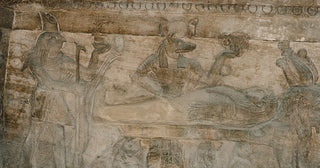
In Alexandria, bride of nostalgia, cafes may be little wormholes through which the tourist travels back in time.
Share to your Instagram story
Your link is copied. Add this picture to your story, then choose the Link sticker and paste.