Tinashe Nyamudoka
Tinashe Nyamudoka, founder of Kumusha Wines and Kumusha Coffee, is more than a world-class sommelier; he is a symbol of how wine, culture, and competition can challenge global narratives about taste, flavour, and power.

Published in Standart Issue 43
As a member of Team Zimbabwe in the World Wine Tasting Championships, he broke barriers and redefined who belongs at the highest levels of international wine culture. His remarkable journey, chronicled in the acclaimed 2021 documentary Blind Ambition, traces his path from Harare to South African fine dining and ultimately onto the world stage in France, revealing not only extraordinary personal dedication but also a collective story of representation, perseverance, and pride.
More than this, Tinashe’s journey into the world of wine led to grappling with issues present in the way we discuss flavours: whose flavours take centre stage and are used in international discourse and evaluation, and whose are relegated to the background? When you come from a culture with a completely different flavour lexicon to that which is traditionally used in the wine industry, how do you first make sense of different sensory expectations and experiences, and then begin to communicate these to customers and consumers without losing your own reference points? These questions have relevance for the coffee industry too, where our standard evaluation tools are based on flavour references often unfamiliar to those in producing countries, potentially shutting certain sensory experiences out of the conversation.
We at Standart like debating these kinds of heady questions, but we also like a drink. So, after a week of travelling around Zimbabwe with Tinashe a few cases of wine and a whole bunch of coffee (covered in depth in our Zimbabwe profile in issue 41), we kicked back with our new friend and a glass or two of Chenin Blanc on a patio in Harare to chat about his story up until this point.
Hi, Tinashe. We’re visiting Harare, the capital of Zimbabwe and your hometown. But you live in South Africa now, having moved away during the 2008 economic crisis. What was happening in Zimbabwe at that point?
Zimbabwe gained independence in 1980. Things were good at first, but by the late ’90s the economy stalled, and our political situation became more complicated. In 2008, the economy really tanked, and we entered a period of unreal hyperinflation. Economically, no country, apart from those at war, has ever experienced what we did that year. I was working in a supermarket, but there was nothing on the shelves. What was I supposed to sell the customers?
Prices rose by the minute. You could walk into a restaurant, buy a burger for $10, and an hour later it would cost $15. The Zimbabwean banknotes you might have seen, with billions printed on them, are from this period.
So what did you do?
The only thing I could: I left. I had a friend in Cape Town who said, ‘Come here. We’ll figure something out.’ I packed a few clothes and took a bus for two days. I was lucky because I already had a passport and could enter legally; many people who didn’t were jumping the border, crossing via the river.
It was a big change for me. I was in my early twenties and had been working in a supermarket for a while, where I was part of a managerial training programme. I really liked my life; I’d just bought my first car!
In Cape Town, four of us shared two beds in one room. I was desperately searching for a job, but I didn’t have a work visa. To get a South African work visa, you need ‘critical skills’. Well, I’d skipped university because I hated studying. I wasn’t trying to be a bad student; I didn’t know it at the time, but I have ADHD. I eventually received refugee status, but it was hard going for a while. With that status, I was able to open a bank account and secure formal employment.
What did you do for work when you got to South Africa?
Initially, nothing, while I sorted out my visa. My savings were quickly draining. Then, a friend of a friend knew a Spar location that was looking for bakers. The pay was awful, but I had a bit of knowledge about bakery operations from the grocery manager programme. When you’re baking, you have to work at four a.m., but by noon I was done, so I’d spend my afternoons looking for other jobs.
Desperate, I finally lied on my resume, claiming I had restaurant experience. My friend, who worked in a restaurant, listed his number as a reference. I went to countless interviews and was rejected from so many places. Eventually, I got lucky and was hired at The Roundhouse, an upscale French restaurant in Cape Town. I just clicked with the interviewers–they appreciated my honesty in ultimately fessing up to having no restaurant experience, only bakery. They started a programme taking on people without experience. As one of Cape Town’s best restaurants, they took a chance on all of us. choosing me from a convenience store bakery, along with a gardener and a bricklayer.
‘I’m a practical guy; I don’t like feeling sorry for myself, as that’s just a recipe for misery. Things were hard, and I needed to earn more money. I watched what the more senior staff were doing: wine was the key.’

What was it like starting to work in fine dining?
I was terrified. It was my first time in such a restaurant. I was scared to enter the dining area, yet also fascinated. These people were just sitting there, chatting, eating beautiful food, and drinking wine. It was beautiful.
I’m a practical guy; I don’t like feeling sorry for myself, as that’s just a recipe for misery. Things were hard, and I needed to earn more money. I watched what the more senior staff were doing: wine was the key. We were already receiving some wine education, but I decided to really focus on it.
What was your early wine education like?
I had great teachers who connected wines to local animals familiar to us Africans. Cabernet Sauvignon, for instance, is like an elephant—thick, big, and bold. Chardonnay, on the other hand, is like a kingfisher—colourful, bright, and goes well with fish. I thought, ‘Okay, I understand this.’ It was fun and relatable. I still use these ideas when I introduce people to wine!
Suddenly, I no longer feared the dining room. I got to make it my stage as I served wine.
They eventually sponsored me to attend a sommelier training course. Wine was the first subject I truly enjoyed studying; it involves history, geography, agriculture, meteorology, and the senses. By this time, I was totally in love with wine and could see no other path forward for myself.
I eventually went to work at a hotel—a bigger space with more wine. I had some great mentors there, and in 2013, I won a competition for the best wine steward in South Africa. After that, I moved to Durban for work.

Can you tell us about the pivot into starting your own wine company?
At that point, having been in South Africa for six years, I realized that things weren’t going to return to how they were in Zimbabwe, and I might as well settle in South Africa. I wasn’t alone in this thinking; there’s a huge Zimbabwean (Zimbo) diaspora here. I thought that if I created a wine brand with a Zimbabwean feel, to it I would have a ready-made clientele within this diaspora. I could also continue making wine accessible to people who haven’t historically been seen as the ‘right type’ of consumer. The inner entrepreneur I didn’t even know I had suddenly kicked in, and that’s how Kumusha came about in 2018.
What does Kumusha mean?
Whenever you meet and connect with a Zimbabwean in the diaspora, the first question you always ask is: Where is home? Kumusha ndepupi? Oh, this my home, kumusha. I come from this side of the country; oh you have relatives there. It creates both nostalgia and dialogue. The kumusha concept means your home, your roots, where you come from. Beyond your citizenship, we all have that one place that feels right: here are my roots, my heritage. That’s kumusha.
How did you wind up competing at the World Wine Tasting Championships?
One of my Zimbabwean friends had competed for South Africa the year before, and I thought that was cool. I’d never left Africa, and seeing him in France—a holy place if you’re into wine—I said, ‘I’ve got to do that.’ But it turns out that each country’s team—made up of four individuals—is only allowed one foreign representative. The next year, a whole bunch of us Zimbabweans showed up, vying for that single foreign spot on the South African team. By the end of the South African national qualifiers, three Zimbabweans were in the top 10. The convenor of the South African team approached us and suggested, ‘Guys, why not just create your own national team?’
How was that logistically for you?
We were able to register quickly, but then realized we needed a significant amount of money. Around £10,000 for flights, lodging, and other stuff. We certainly didn’t have that kind of money. We had all left Zimbabwe for South Africa due to the economic situation, and while we were earning more, no one simply had that kind of money sitting around. So we made a video, posted it on Facebook, and it quickly spread. A famous wine journalist then helped us set up a crowdfunding campaign, and people were incredibly responsive. That’s also the point at which the documentary crew got involved.
‘KUMUSHA means your home, your roots, where you come from. Beyond your citizenship, we all have that one place that feels right: here are my roots, my heritage. That’s kumusha.’

How do you train for a competition like this?
You have to taste constantly. If I give you a Chardonnay from South Africa and you’ve never tasted it, the chances are you won’t identify it. You might only guess its origin. One of our biggest challenges, being based in South Africa, is that we’re a far-flung wine-growing region. We don’t actually get many international wines here.
Even though we were all experienced sommeliers, we brought in a major European wine supplier to help us, bringing in wines from every producing country. Then we set up a boot camp session, and for two weeks, we tasted all day, every day. 50 to 60 wines a day. Tasting, analysing—bang, bang, bang—with no rest.
What is the competition itself like?
You get six whites, six reds, and you have 10 minutes to identify them. They come in a glass; you don’t see the label. You have a team and a coach. When your teammates are tasting, you’re not allowed to taste or smell; you can only listen. Then it’s your turn. Your collective goal is to identify the country of origin, the appellation (or region), the variety or varieties, the vintage, and the producer.
As a team, our strategy was for each person to get two minutes to taste individually. By that time, you should be able to state, on your own, ‘This is what I think each wine is.’ Everyone writes their findings down, and then we come together, and the team captain moderates the discussion. You start the process of elimination, which can be tricky. For instance, you might have three teammates saying,‘This is a Sauvignon Blanc,’ but your fourth person—who might be correct—is suggesting something else. That’s where the captain and coach can help mediate the discussion.
It’s intense, but very fun!
What’s it like selling and communicating wine in an African context where both the flavour and cultural landscape can be very different from the countries we often associate with fine wines?
Historically, wine has been strongly linked to a Western European approach and its associated flavours, which aren’t necessarily the flavours we have here. Initially, when we started here, we somewhat adopted the approach of, ‘It’s foreign and that’s how they do it. So that’s how we should do it.’
But as a Zimbabwean, I never grew up eating things commonly listed in tasting notes, such as blackberries or blackcurrants. These flavours are foreign to me. I can’t pick up on these flavours, no matter how hard I try. It’s not that I can’t smell or taste the wine; it’s that wine relies on association. You have to associate it with what you know and recognize. I know indigenous flavours. I can familiarize myself with them, and then I have to do the work to link them to more ‘mainstream’ flavours. For example, if I smell the sugarcane we have here, it’s probably a wine from Chile. If I smell cow dung, it’s likely a Rioja.
Once I realized I could work with my own flavours—the ones I grew up with—I had a much more enjoyable time with wine. And, importantly, I could explain it far better to my clients. It’s tricky though when you’re doing things like sommelier exams, because you can’t use these indigenous flavours, you have to use the ‘standard’ ones.
That’s how I developed my tasting approach, in parallel with my own sensory knowledge as a Zimbabwean. The French modelled a culture around wine. The Italians have their own, as do the South Africans and Chileans. Why not me? I wanted to connect wine to my own roots so I could share it with others from my background too. Nobody owns wine; it can be for any of us. I respect the different traditions, but I also want to make space for my own culture.
There’s no need to be pretentious. Don’t say you’re tasting blackberry if you’ve never tasted one. Just be yourself. There’s space for all of us around the table.
How does this link to your approach to coffee? You’ve started a coffee farm in your grandmother’s home village and are working on improving Zimbabwean specialty coffee output.
Like wine, coffee is fundamentally a plant. I approach it with love, respect, and a cultural perspective. My grandmother had a coffee plot; since 2019, we’ve expanded and improved it, attracting other curious farmers in the area.
Just as there's no single ‘best’ wine country—with each region offering unique characteristics for different occasions—I apply this philosophy to coffee. We won’t make Zimbabwean coffee ‘the best’, because no such thing exists. We all have unique coffees that require distinct marketing. As we rebuild the industry after its 2000s collapse (when production fell below 300 tonnes annually), our goal is to celebrate our uniqueness and invite people to include Zimbabwean coffee in their collections. Like wine, I want to understand the coffee’s roots and bring it back to Zimbabweans, who drink more tea than coffee. First, we care for it; then, we explain it in local, true, and meaningful flavour terms.
Keep reading
Become a reader—from $60/year
A membership helps us stay independent, create a whole range of stories across our different platforms, and continue to invest in creative community we work with.
Join Standart Already a reader? Log-in here.
Explore more stories

Rachel Apple is a Cup of Excellence Head Judge, photographer, and co-founder of Raise the Bar, a community and education platform for specialty coffee professionals. She loves bin diving for vinyl,...
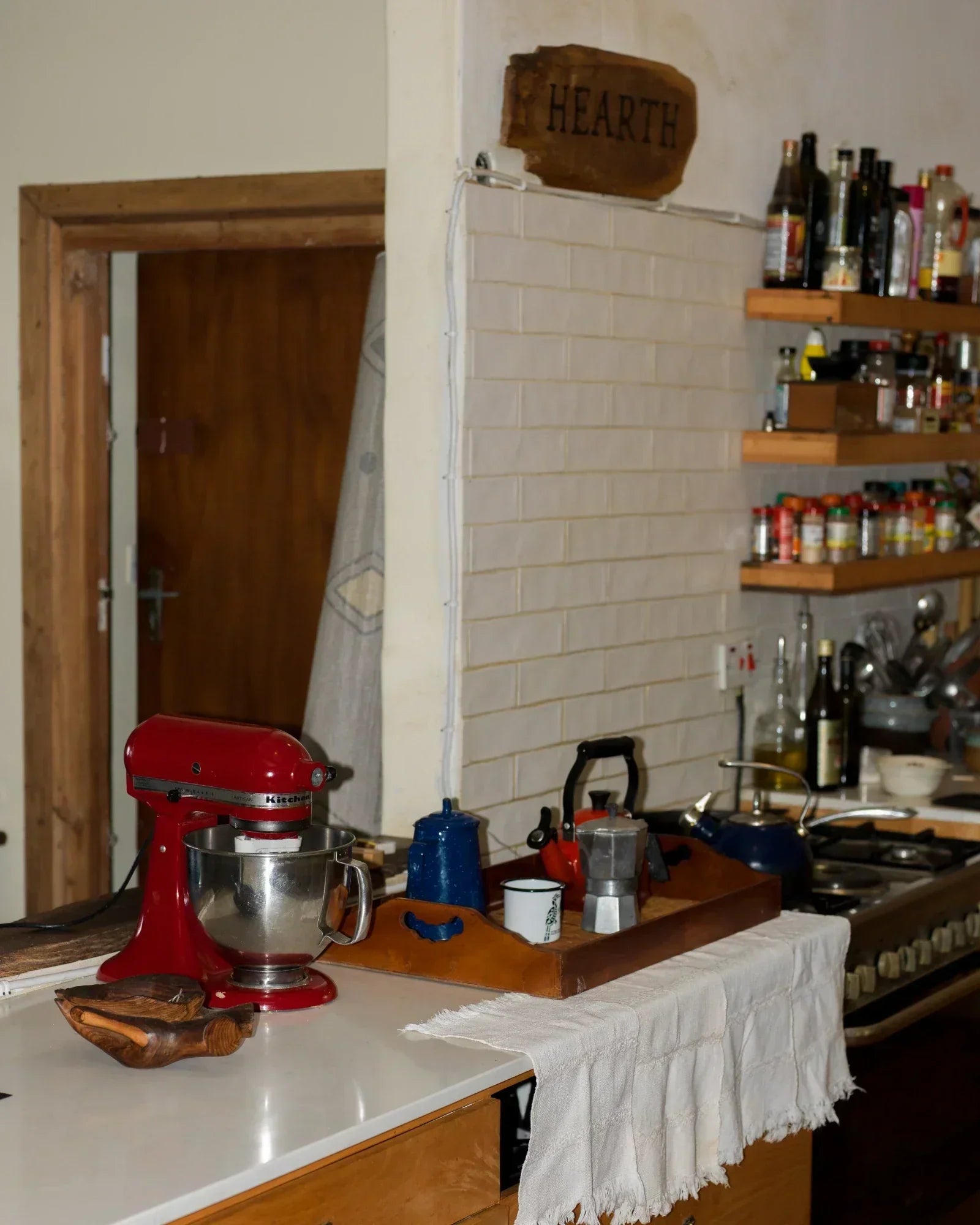
As the sun set in Zimbabwe’s lush Honde Valley, I watched kids push car tyres up and down the street, racing each other through the village. In Africa, most often, less is more. People are used to ...

Los Angeles resists clean outlines, and its coffee culture lives somewhere between softness and grit. Built from migration, precarious work, and long-standing food traditions, it moves at uneven te...
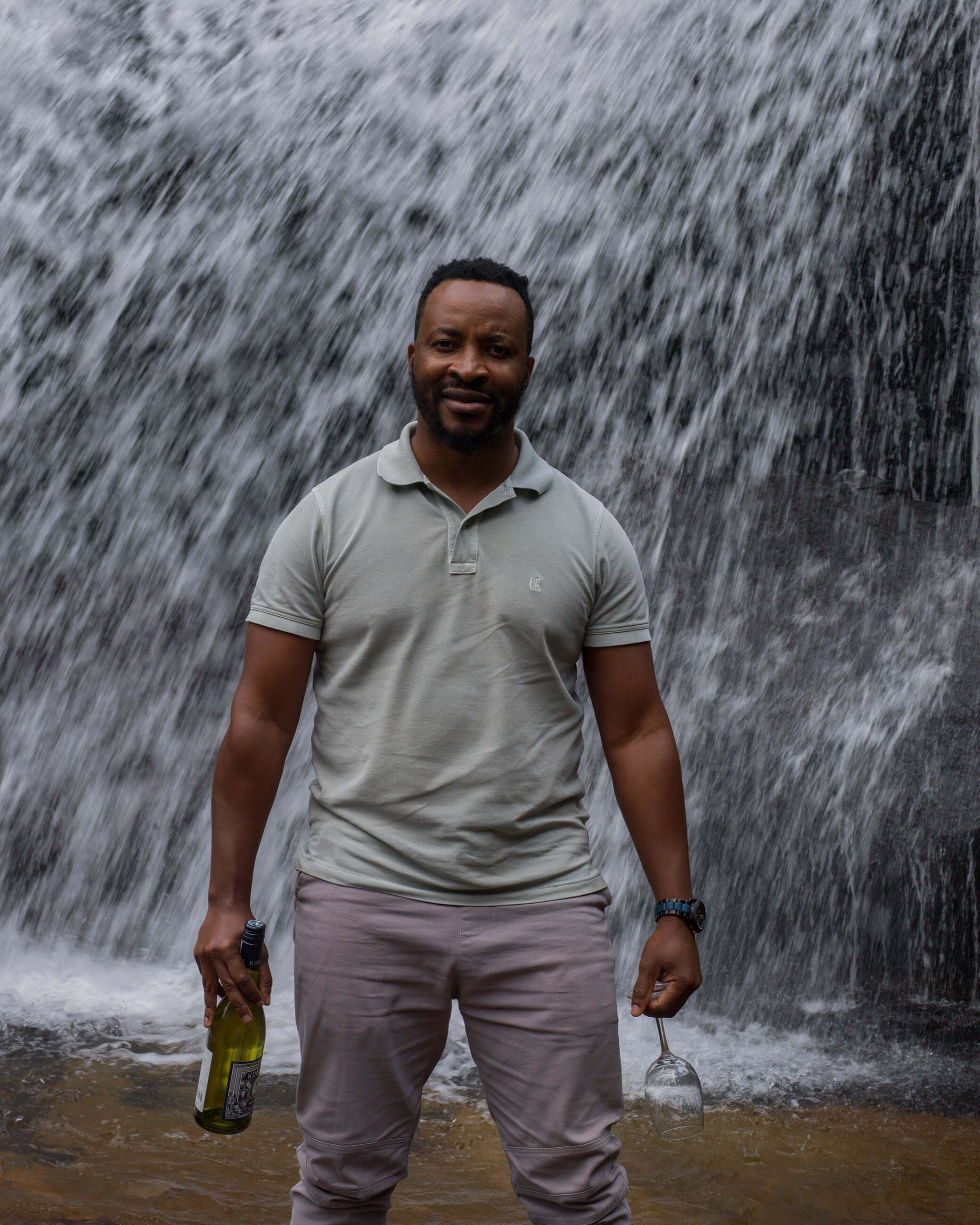
Tinashe Nyamudoka, founder of Kumusha Wines and Kumusha Coffee, is more than a world-class sommelier; he is a symbol of how wine, culture, and competition can challenge global narratives about tast...

When exploring foreign lands, few feelings compare to the triumph of discovering something known only to locals. Realizing these euphoric moments requires a healthy pinch of boldness, however; one ...
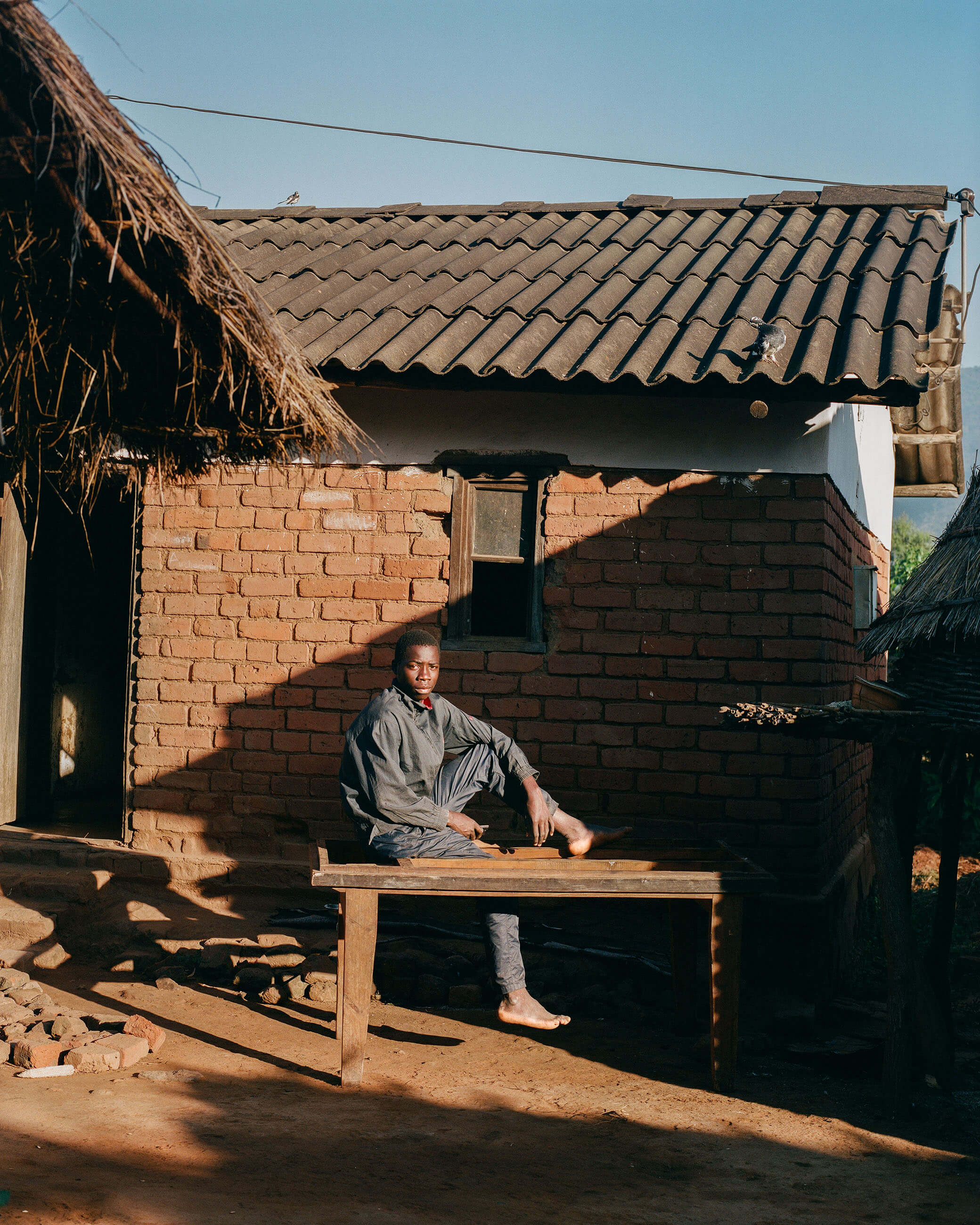
Some coffee origins are still in the process of becoming. Malawi is one of them—a place where potential feels tangible even if not fully realized. Farmers are steadily shaping a future for their co...

Blue-sky ski days to negroni nights, Hakuba is a 24-hour town hidden in the Japanese highlands. From the staunch octogenarian locals fiercely guarding their old traditions, to the young crowd of mu...

In recent years, matcha has become one of the most popular drinks ordered and enjoyed in cafes around the world. But with its growing popularity, several issues have also emerged, ranging from a la...

As coffee grew cheaper in 18th-century Europe, it spread beyond the elite, alarming German rulers. In Prussia, Frederick the Great saw it as a threat to order, economy, and authority. His efforts t...

Valtteri Bottas is a known quantity at Standart, being as he is a past interviewee and co-owner of Finnish roastery Kahiwa. He moves quickly, and not only when he’s piloting an earthbound rocket ar...