Romain Wyndaele

Romain Wyndaele is a former professional middle-distance runner who once claimed a French national title over 1,500 metres. He now balances dual careers as an international model and a head barista, all while becoming a central figure in the modern running subculture. We spoke to Romain to discuss the ‘bullshit’ of the runner’s high, the precision of lactate testing, the logistics of running with a Border Collie, and the anxiety of the ‘influencer’ lifestyle.
It’s clear from looking at your social media profile that you enjoy looking great while exercising—something that makes most people look bloody awful—and creating aesthetically pleasing content. I want to test your commitment to this balancing act: If you achieved a personal best (PB), but the finish-line photo looked awful—bad posture, drooling—would you post it, or does the aesthetic matter more than the record?
Of course I’d post it! If it’s a PB or winning a big race, I will always prioritize performance over content. I have a background as a professional runner, so performance comes first. For me, a PB is a PB; it doesn’t matter how it looks. If I can mix performance with good aesthetics, that’s great, but there is nothing greater than winning a race.
Are you more motivated by winning or by the fear of losing?
They’re closely related, but winning, definitely. I’ve always been a competitive person, but things have changed recently. Nowadays, I still train to perform, but I do it for personal pleasure. I have times I want to achieve, and I can still win smaller races, but when it comes to the big races and championships, winning’s not the goal anymore. I just want to train and improve for my own satisfaction.
You mention running for pleasure, which has got me thinking of the mythical ‘runner’s high’ that some people apparently experience during their exertions. The closest I’ve ever come to a ‘high’ while running was probably due to hyperventilation and was far from pleasurable. So, is there actually such a thing?
It’s total bullshit. I see people posting about the runner’s high they get on their daily jogs, and, for me, that’s fucking nonsense. I’ve never experienced a high from a regular jog. You always feel good in your head once you’ve stopped, but not high.
The only time I’ve felt something like a high is during intense track workouts while training for a distance like the 800m. At a point, there’s so much lactic acid in your system that you get headaches and can’t walk because of the pain. You kind of feel high simply because you are so empty and the intensity was so extreme. But high from a regular jog—no way.

I’m very glad to hear you say it. I thought I was cursed with some sort of genetic affliction. Your speciality was the 1500m. What is it about that distance that suits you best?
I’m not exactly sure; it’s just the distance at which I could perform best. I won a French national title at that distance. These days, though, I don’t really train for the track. Some days I love the long-distance stuff where you’re moving at a pretty quick but relaxed pace, like marathon pace, and the kilometres feel like they’re flying by, and other days I’m 10 kilometres into a run just wanting to go home.
Why does a 1500m specialist need to run 140 or 150 kilometres a week? That seems like a massive amount of volume for a mid-distance race.
You need a massive base of endurance. The 1500m is tricky; if you only train at race pace, you only have one or two ‘gears’. In a tactical championship race, you need to be comfortable at every pace. By training everything—from slow endurance to sprinting—you can shift from ‘gear two to eight’ instantly when someone accelerates.
I hear a lot of chatter about training using heart rate zones to monitor how hard you’re going. Do you use heart rate zones to manage training at those different paces, or some other method?
No, we use lactate control. My coach and I take blood samples during the workout to check if the intensity is correct. It’s much more precise than using your heart rate, which fluctuates if you’re tired or just having an off day.
You can’t lie with lactate. Usually, for a threshold 1 session—roughly marathon pace—we aim for two millimoles per litre of lactate. For threshold 2—roughly 10k pace—it’s around four mmol/L. Some days you feel like shit but the numbers are good, and you know you’re in the right zone. Other days you feel great, but the lactate is too high, and even though your heart rate is lower, you know you have to slow down because your body is actually working too hard.
‘I see people posting about the runner’s high they get on their daily jogs, and, for me, that’s fucking nonsense. I’ve never experienced a high from a regular jog.’
What about strength training? What does a runner have to do outside of, well, running?
I have to admit, I don’t do core work or lift anymore. I basically only run. My friend tried to get me to go to a gym last week, and I realized my last session was four or five years ago. I hate being a gym rat. I prefer training power through hill sessions, which helps your position and core naturally.
When you’re out on an easy run around town or in a park where ‘normal’ people are also running, presumably you blow past them like lightning. Do people look shocked or say something when they see you running so quickly?
Ha-ha! Of course I see people, and some do look shocked, but I can’t remember anyone commenting. Judging by the look of suffering on their faces, I think most casual runners are usually running at too fast a pace; the majority of your runs—about 80 per cent of them—should be at a very comfortable pace. So perhaps it is because they’re struggling for breath that they don’t make more comments.
Or perhaps because sound doesn’t travel quickly enough!
Or that! But I usually run with earbuds in, so maybe they are making funny comments and I just don’t hear them.
And what about altitude training? How do you handle it, and how does it feel when you return to sea level?
Directly after coming back to sea level, you have a tiny window of two or three days where you feel good. But then, from day three to day 10, you feel like absolute shit. That’s the dangerous window. If you do too much training during those ten days, you can ruin your whole season. But once you get through that and your body adjusts, the feeling of being able to run fast while everything feels easy is insane.

You often run with your dog. Does she keep up, or do you exhaust her?
She is a Border Collie, so she is nuts. Under 12 kilometres, she will beat me every time. Past 15 kilometres, she starts to get a bit tired. I only take her on forest or gravel runs because asphalt isn’t good for her feet. When I’m travelling for shoots in Paris or Switzerland, she usually stays with my parents and their dog in their big garden.
To move back to aesthetics, how did you transition into modelling?
I started about five years ago, but it was only a few shoots a year. Once I started getting tattooed four years ago, I began getting reached out to more often. My tattoos gave me more confidence in front of the camera. They are a way for me to express myself without talking, which is great because I’m an introvert.
In the sea of conformist, algorithm-driven, over-cautious, and soulless marketing drivel in which we are all drowned, what makes a running campaign stand out to you?
For one thing, it is the talent of the photographer. Too many times, brands and their marketing people won’t let a photographer—whom they’ve chosen presumably because they like their style—actually shoot in their style. I think the important thing is to capture something authentic, real, human. In the past, brands used staged running pictures, usually with models and not athletes, which didn’t look real and were super boring. Now brands want to see the sweat, the effort, the stride—something authentic. And that can be a challenge; it’s actually very difficult to find real runners for campaigns who are comfortable in front of the camera and have a good stride but aren’t already locked into a contract with a specific brand.
‘Judging by the look of suffering on their faces, I think most casual runners are usually running at too fast a pace; the majority of your runs—about 80 per cent of them—should be at a very comfortable pace’
I hope I don’t offend you by using the term, but I am interested in whether the ‘influencer’ lifestyle is as glamorous as it looks.
It has its good and bad aspects. I love the freedom to travel, to go biking or skateboarding in amazing places if I want, but the downside is the inconsistency. You can make a lot of money one month and nothing for the next three. And it’s all very last-minute. I might get reached out to for a shoot taking place in six days and not know if I have the job until three days before. You often have to pay for your own travel and hotels in advance and then wait 30, 60, or 90 days to get paid by the brand. It can be stressful.
Despite the travel, gruelling training schedule, and modelling, you still work as a barista. What keeps you behind the bar?
I love the connection with people. I work at Maldaner in Wiesbaden, Germany; we’re coffee roasters first, but we have two shops. I see it as my job to introduce people to specialty coffee. Most people order the same thing every time, but I’ll ask, ‘Have you ever tried a flat white?’ or I’ll explain the difference between a washed process and a natural process.
Who is harder to please: the coffee geeks or the mainstream customers?
Oh, the geeks, because they like what I like! They usually order filter coffee, which is my favourite. You just have to listen to what they like—floral, fruity, or a specific country of origin—and find the right bean.
The harder customers are the ones who want a traditional espresso and are shocked when ours tastes different. They’ll ask, ‘What is this?’ and I have to explain that it’s a light to medium roast, not burnt, and that there’s no robusta in it.

Tell us about your home setup. By the glimpses I’ve caught of your morning routine on your Instagram profile, it looks pretty enviable.
Aside from various pour-over brewers, I have a Lelit Bianca espresso machine with the flow-control pedal. I use it to experiment—playing with pressure and trying ‘turbo shots’ and that sort of thing. It’s mostly for training. I can’t serve a bad cup at the shop, so if I want to learn a new latte art pattern, I’ll buy some milk and practise at home for an hour. I can’t practise on a customer’s cup!
You’re also into extreme sports—skateboarding, snowboarding, downhill biking. Does the risk of injury worry you?
I had to stop those sports when I was a professional runner because if you flip a board into your ankle, you can’t run for days. Now I have more freedom, but I’m getting older and don’t take the same risks. I had a ridiculous crash this summer on a mountain bike—no gloves, dry rocky ground—and I just shredded both my palms. It was the most painful, stupid thing.
What is the best piece of advice you can give to a beginner runner?
Train in your own zones. Social media and Strava make people want to run too fast because they know everyone is watching. They ‘overpace’ themselves. But you can only progress if you do the work correctly. Even if your friend has the same PB as you, their training zones might be totally different.

And for the coffee lovers?
Don’t get too stressed about the recipes. People will tell you an espresso has to run for 25 to 30 seconds. Some of the best shots I’ve ever had on my machine ran for 55 seconds. The most important thing is to taste it. If it’s tasty, who cares? Just make sure you know what you changed so you can redo it.
What’s something you couldn’t live without?
That’s tough. It’s not running! It’s probably a little predictable and boring, but I do really love coffee! So yeah, coffee.
What was the single most effective change you made as far as the impact it had on your running career?
Honestly, getting tattoos! They don’t make me run faster, but they definitely improved my career.
We know you’re a bit of an adrenaline junkie, but what is your greatest fear?
Pain. I have a low tolerance for pain. It helps me with training because I feel everything so intensely, and I know when I’m in the right zone and when I need to stop before I get injured.
What’s the most mundane activity that terrifies you?
Paperwork and taxes. They never prepare you for how awful it is in school.
What’s the weirdest thing you’ve seen today?
Someone ordering a matcha latte with a shot of vanilla syrup!
Keep reading
Become a reader—from $60/year
A membership helps us stay independent, create a whole range of stories across our different platforms, and continue to invest in creative community we work with.
Join Standart Already a reader? Log-in here.
Explore more stories

Rachel Apple is a Cup of Excellence Head Judge, photographer, and co-founder of Raise the Bar, a community and education platform for specialty coffee professionals. She loves bin diving for vinyl,...
As the sun set in Zimbabwe’s lush Honde Valley, I watched kids push car tyres up and down the street, racing each other through the village. In Africa, most often, less is more. People are used to ...

Los Angeles resists clean outlines, and its coffee culture lives somewhere between softness and grit. Built from migration, precarious work, and long-standing food traditions, it moves at uneven te...
Tinashe Nyamudoka, founder of Kumusha Wines and Kumusha Coffee, is more than a world-class sommelier; he is a symbol of how wine, culture, and competition can challenge global narratives about tast...

When exploring foreign lands, few feelings compare to the triumph of discovering something known only to locals. Realizing these euphoric moments requires a healthy pinch of boldness, however; one ...
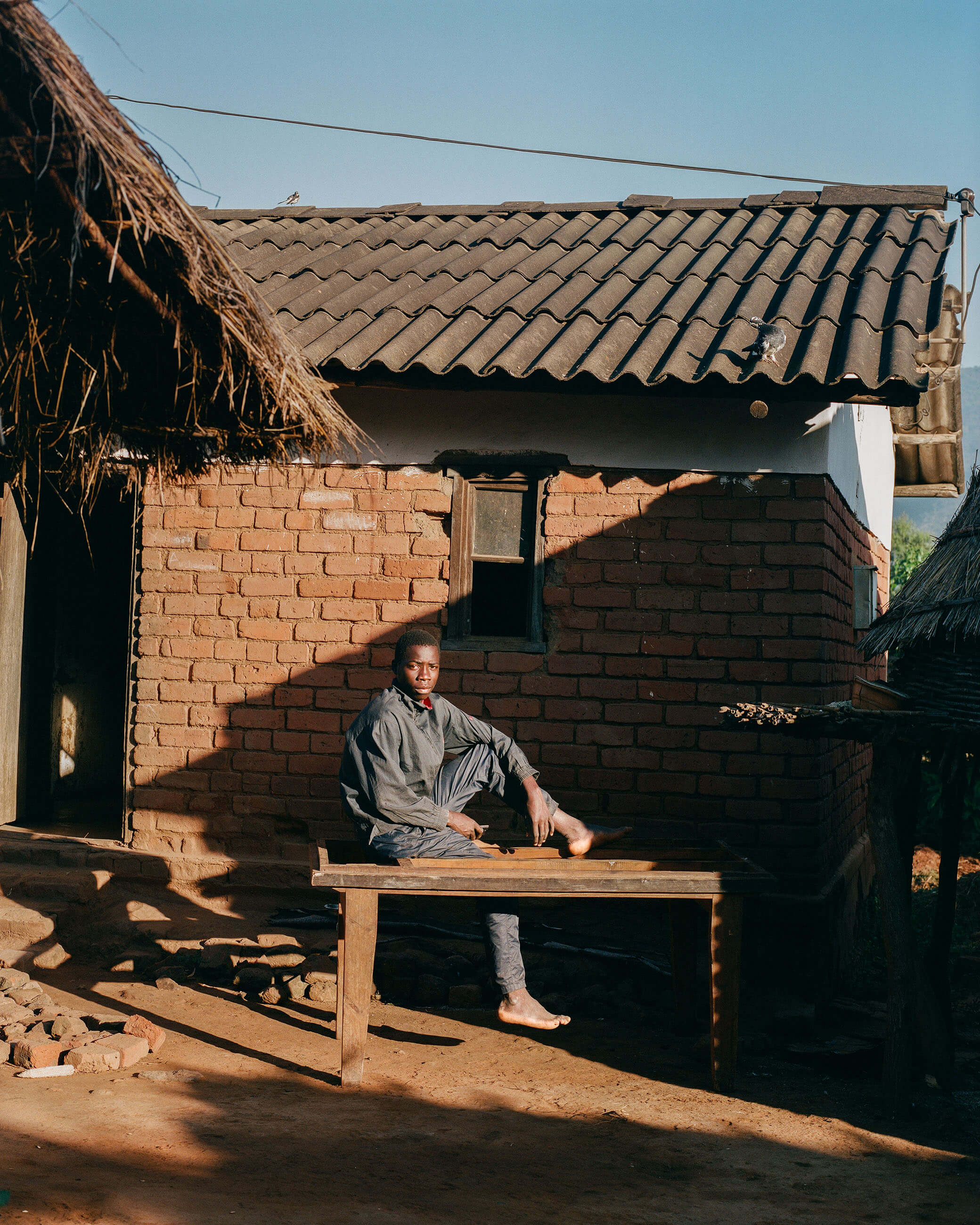
Some coffee origins are still in the process of becoming. Malawi is one of them—a place where potential feels tangible even if not fully realized. Farmers are steadily shaping a future for their co...

Blue-sky ski days to negroni nights, Hakuba is a 24-hour town hidden in the Japanese highlands. From the staunch octogenarian locals fiercely guarding their old traditions, to the young crowd of mu...
In recent years, matcha has become one of the most popular drinks ordered and enjoyed in cafes around the world. But with its growing popularity, several issues have also emerged, ranging from a la...

As coffee grew cheaper in 18th-century Europe, it spread beyond the elite, alarming German rulers. In Prussia, Frederick the Great saw it as a threat to order, economy, and authority. His efforts t...

Valtteri Bottas is a known quantity at Standart, being as he is a past interviewee and co-owner of Finnish roastery Kahiwa. He moves quickly, and not only when he’s piloting an earthbound rocket ar...