Noah Lane

Noah Lane is an Australian free surfer and co-founder of Foam, a specialty coffee shop located in Bundoran on the west coast of Ireland. Born and raised in Rainbow Beach, Queensland, he first visited the Irish coast a decade ago for a surf and music festival. There, he fell in love with the place, met his wife Tara, and decided to stay. Today, he balances his life between brewing coffee in his shop, surfing Ireland’s best waves, making films, and featuring in magazines. Standart caught up with Noah in Galway to talk about embracing a surfing career, managing fear in big waves, and his growing interest in coffee farming.
Hey Noah! Autumn is almost upon us, and soon winter will hit the west coast of Ireland. How does a surfer who grew up in Australia cope with the harsh weather?
I feel like in the first few years, it was easier because it was more of a novelty, especially coming from Queensland. Everything felt like, ‘Oh my God, it’s snowing!’ or ‘Wow, 100-mile-an-hour winds!’ It was all kind of exciting. Now, it feels different. The cold and harsh weather gradually wear you down. It’s no longer that immediate shock; instead, it’s more of a slow adaptation. But it has become second nature for me. There’s a saying, ‘There’s no bad weather, only bad clothing,’ and it’s so true.
And from a surfing perspective?
This time of year is the best for waves. There’s always swell, but it’s also really stormy, so it’s about finding those moments between the storms. It’s nice to have the motivation to get outside when the rest of the population is sheltered indoors and everyone is like, ‘What are you doing? Surfing?!’ There’s something cool about being part of this small community of surfers that thrives in conditions most people would avoid.

You were born and raised thousands of miles away, in Rainbow Beach, Queensland. Tell us about your childhood and how you got into surfing.
When I was around eight or nine, my parents, both school teachers, moved our family to Rainbow Beach from a place without waves. They recognized my brother and my interest in surfing. We spent every day off, every afternoon, and every morning at the beach. Looking back, I realize we had an incredible childhood; we were always outdoors, and our parents were incredibly supportive of our surfing. We participated in a competitive circuit as kids, and mum would wake up at 3 a.m. to drive us to training sessions two hours away, then take us back to school an hour away, before heading to work. It’s astounding to think about it now.
What’s your first memory on a surfboard?
It’s tough to pinpoint my first memory, because I started surfing so young. I remember being around seven or eight, holding onto the nose of a surfboard with my dad on the back, riding waves. I might have been even younger. From as early as three, we were always in the ocean together—just the four of us, all surfing.
When did you start to compete?
In Australia, surfing is deeply embedded in the culture, providing a clearer pathway for young surfers who aspire to make it a career. I think I’ve always been naturally competitive, growing up with a younger brother. I began competing with school surfing and continued through my teenage years, eventually entering the Pro Junior series. It was highly competitive, featuring some of the best surfers in the world were coming up through that circuit. Looking back, it’s pretty cool to think about surfing alongside and watching those guys during such a pivotal time in their careers.

Did you quickly catch the attention of surf brands?
In surfing, especially for kids, sponsorships are common if you show even a hint of potential. The sponsorships might start small—like receiving free T-shirts or clothes—as brands try to catch young talent early. For a kid, the idea of being sponsored felt monumental.
I think I was around 13 when I first received sponsorship, but I didn’t start getting paid for surfing until I was about 20. In surfing, there isn’t a definitive moment when you ‘turn pro’. Unlike skateboarding, which has a clear marker like the release a pro model skateboard deck, surfing is much more subjective. Whether someone is considered a professional often depends on perspective—whether you call yourself one or others do.
You may have sponsors and get paid to surf, but do you see yourself as a professional surfer?
Personally, I’ve always had a bit of imposter syndrome about it. I’ve never confidently claimed, ‘Yeah, I’m a professional surfer’. Even now, if someone asks, I’d likely say, ‘I surf... and I work in a cafe.’ While I do get paid to surf, and I approach it professionally, I wouldn’t necessarily label myself a ‘professional surfer’. It’s simply a part of who I am.

When did you decide to stop competing?
After the Pro Junior circuit, the next step was to transition to the Qualifying Series for the World Tour, which represents elite professional competition. I think I I lacked the self-belief to fully commit. Winning is exhilarating, of course, but the reality is that you lose far more often than you win—I’d say 99 per cent of the time. Plus, it’s incredibly expensive for a young surfer.
Another factor that put me off was travelling to amazing places for contests but only experiencing them in a limited way. You’re so focused on competing and trying to win that you miss out on genuinely enjoying or exploring your surroundings.
How did you end up settling permanently in Ireland?
It was around 2013—about 12 years ago—when I was in my early 20s, embarking on that classic rite of passage trip many Australians take: the first trip to Europe. I was invited to a surfing competition coinciding with a music festival in Bundoran, a seaside town on the west coast. When I arrived, I immediately felt an incredible energy—the thrill of being in a new place, surrounded by interesting people, and a sense of possibility. It was hard to articulate, but there was something undeniably special about it. During that trip, I also met Tara, who later became my wife. Afterwards, I kept returning to visit and eventually decided to stay for a year thinking, ‘Okay, let’s see if I can handle the weather.’ Fortunately, the weather didn’t bother me at all.
When the big swells hit the coast, you’re always in the water or on the road chasing waves. How do you prepare for these sessions?
I balance my time between the cafe and surfing, with surfing taking priority when the waves are good. I don’t follow a traditional training programme, but I stretch a lot and swim regularly. I actually hated swimming as a kid but now I find it therapeutic. The meditative aspect of focusing on my breathing has become something I truly enjoy. Since I’m not naturally good at swimming, I really have to concentrate, which makes it all the more rewarding.
Yoga has become a significant part of my routine. I’ve been practising it since I was a kid, thanks to my mum, who introduced me to it. I’m grateful for that, as it’s become such a natural habit that I don’t even think about it anymore. I went through phases of practising on and off in my late teens, but now it’s a daily part of my life. Yoga is incredibly beneficial for surfing, especially in the cold.

Do you get nervous before a session?
What I love about surfing bigger waves isn’t so much about riding the biggest wave possible. While that’s a great motivator, my focus has shifted to the mental aspect. It’s the inner dialogue you have with yourself, whether preparing the day before or while you’re in the water.
Surfing big waves didn’t come naturally to me. I grew up in an area where the surf was small most of the time, so I wasn’t regularly exposed to big waves, but now, it feels like there’s no limit. The only thing that holds you back is what’s going on in your mind. Of course, there are physical limits, but when it comes to big waves, much of it hinges on how you manage the mental side.
Can you describe the feeling of being in the water when the waves are over 20 ft (6 m)?
Last year, we had an amazing session at a spot called Mullaghmore in Sligo during the first big swell of winter. On days like that, I usually feel like a scared rabbit, sitting on the shoulder of the wave and just watching—especially after months without seeing waves of that size. I think everyone feels that way to some degree. But for some reason, that day turned out to be playful and fun. I ended up paddling into some of the biggest waves I’ve ever caught, simply because I was in the right state of mind. It felt like play rather than survival, and that made all the difference.
You had a scary accident a few months ago at that very same spot. What happened?
It was a beautiful, sunny day at the end of winter—surprisingly calm, with no wind, which is quite rare. The tide was particularly low, bringing the reef much closer to the surface, and the waves were quite big. I caught a wave and got into the barrel, but I fell and went straight down, hitting the reef hard. I felt straight away that the impact was significant.

How did you get out of the water?
Luckily, my friends were nearby on a jet-ski and rushed to help me, bringing me to the harbour. My good mate Julian was also in the water. We used to live together, and he worked as a chef at Foam. He’s a trained lifeguard and did an incredible job. I was taken straight to the hospital, where I learned that I’d fractured both my pelvis and sacrum and had a large cut on my head that required eight staples. For the first month, I was essentially immobile, followed by about six weeks on crutches at home.
Do you think this experience will impact your confidence in big waves?
It was actually more traumatic for those watching than for me; I was in shock and filled to the gills with adrenaline. I was conscious the entire time and aware that it was a big impact, but I never felt like I was going to die. I won’t really know how I feel until I paddle out at Mullaghmore again.
Has becoming a father changed anything in your outlook?
It’s been a big adjustment, but I’m not sure it has changed my perspective on surfing. I definitely think about my responsibility as a parent more when making decisions. I’ve always been calculated in my decision-making, so I don’t think it has made me more cautious—just maybe more aware of the consequences of my actions.

How did you first get into coffee?
I’ve always been a big consumer of coffee, but it wasn’t until I got to Europe that I developed a genuine interest in specialty. Growing up, it was something I took for granted. As time wore on, I became more passionate about it. I really appreciate the direct-trade aspect of specialty coffee and the value placed on a premium product that many people overlook. That’s what initially drew me in, as it does for many others.
Tell us about Foam.
Foam is a small coffee shop in Bundoran trying to highlight and showcase amazing coffees. I opened it about five years ago with two friends, Gerald Arbuckle and Adam Cross. Our approach to coffee is aligns closely, so it’s nice to feel that we’re representing coffee and our local area in a way that reflects how we see them. We try to create a vibrant space that contributes something to the community, where people can hang out and enjoy each other’s company. My wife, Tara, bakes delicious sourdough bread and doughnuts, and provides these goodies for the cafe.
A few years ago, you travelled to Nicaragua for a sourcing trip. Can you share some highlights from that journey?
We visited a bunch of farms and met many farmers along the way. One of the most memorable experiences was meeting two incredible women who ran a mill. Their energy and dedication were inspiring; they were making a real difference in their community by building schools and engaging in various impactful projects. They graciously showed us around, and we ended up purchasing coffee from them. It was such a special experience to make that connection and then later to serve the coffee in our shop, with photos of the farmers hanging on the wall, and sharing memories first-hand with customers who by purchasing this coffee, were helping to support amazing projects thousands of miles away.

How has understanding the process enriched your perspective?
First-hand knowledge of the process enables me to tell the story behind producers’ coffee more clearly to our customers and team. What fascinates me about specialty coffee is the emphasis on quality—flavours, profiles, and the product itself—and I can communicate that side of things easily because I can do so as the customer actually tastes the coffee and experience what I’m saying in the moment. The harder narrative to convey is the ethical one. The reason you’re paying a premium for this coffee is that it benefits the farmer at the other end of the supply chain. This message is much harder to articulate, especially compared to the more tangible and straightforward notion that ‘this tastes better.’
Has this made you more conscious of what goes into a cup of coffee?
Absolutely, it has heightened my awareness of the decisions I make. While you can apply this awareness to various aspects of life, trying to do so for everything can be overwhelming. It’s important to focus on the issues you are passionate about.
Delivering this message can be a tough elevator pitch at 9:30 in the morning when people are just waking up. It’s not something that can be summed up in a sentence or two from behind the till. Even so, we strive to educate our customers, to bring them slightly closer to the people behind the coffee and to give them a deeper understanding of why specialty coffee such as the stuff we serve is well worth paying more for.
Keep reading
Become a reader—from $60/year
A membership helps us stay independent, create a whole range of stories across our different platforms, and continue to invest in creative community we work with.
Join Standart Already a reader? Log-in here.
Explore more stories

Rachel Apple is a Cup of Excellence Head Judge, photographer, and co-founder of Raise the Bar, a community and education platform for specialty coffee professionals. She loves bin diving for vinyl,...
As the sun set in Zimbabwe’s lush Honde Valley, I watched kids push car tyres up and down the street, racing each other through the village. In Africa, most often, less is more. People are used to ...

Los Angeles resists clean outlines, and its coffee culture lives somewhere between softness and grit. Built from migration, precarious work, and long-standing food traditions, it moves at uneven te...
Tinashe Nyamudoka, founder of Kumusha Wines and Kumusha Coffee, is more than a world-class sommelier; he is a symbol of how wine, culture, and competition can challenge global narratives about tast...

When exploring foreign lands, few feelings compare to the triumph of discovering something known only to locals. Realizing these euphoric moments requires a healthy pinch of boldness, however; one ...
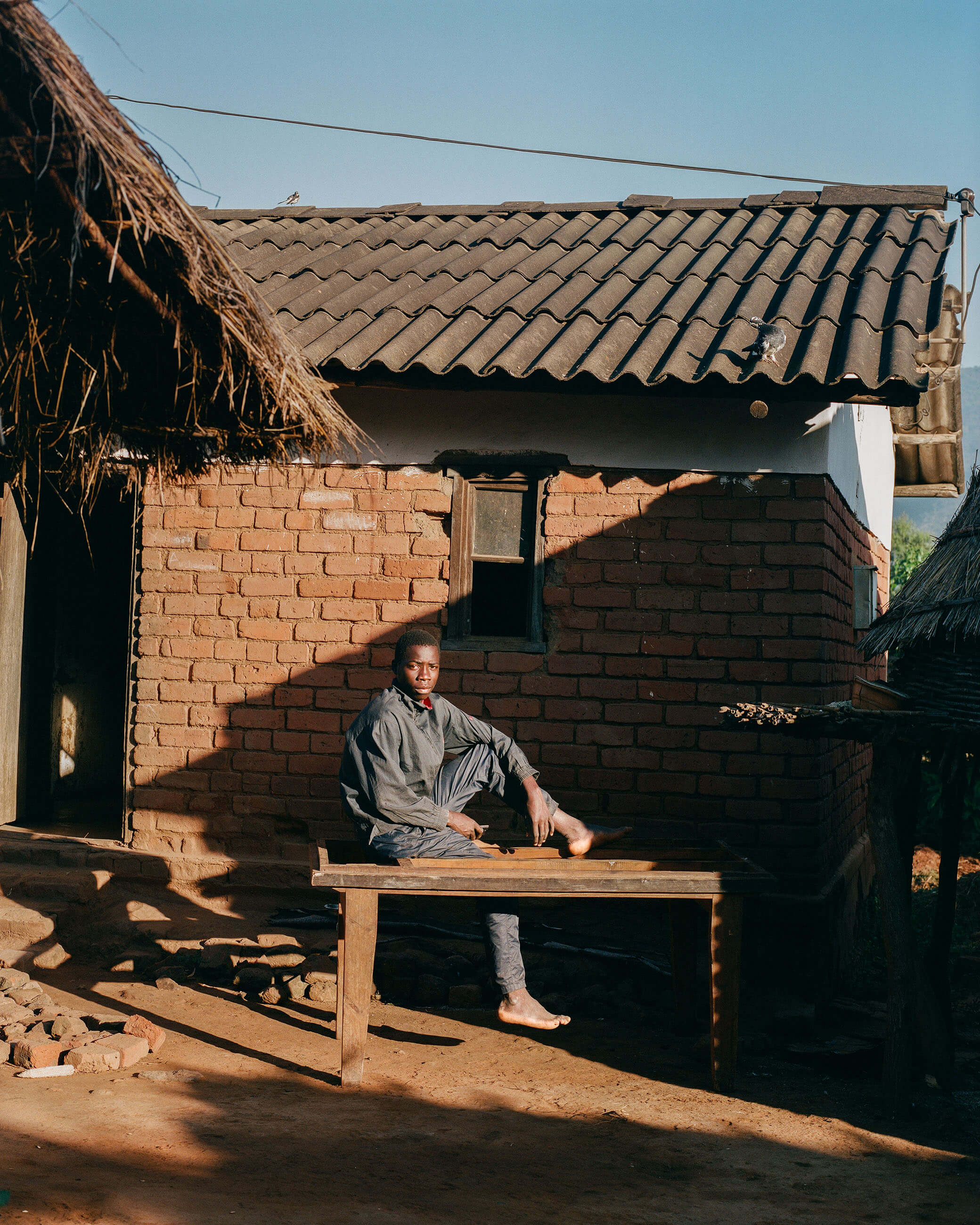
Some coffee origins are still in the process of becoming. Malawi is one of them—a place where potential feels tangible even if not fully realized. Farmers are steadily shaping a future for their co...

Blue-sky ski days to negroni nights, Hakuba is a 24-hour town hidden in the Japanese highlands. From the staunch octogenarian locals fiercely guarding their old traditions, to the young crowd of mu...
In recent years, matcha has become one of the most popular drinks ordered and enjoyed in cafes around the world. But with its growing popularity, several issues have also emerged, ranging from a la...

As coffee grew cheaper in 18th-century Europe, it spread beyond the elite, alarming German rulers. In Prussia, Frederick the Great saw it as a threat to order, economy, and authority. His efforts t...

Valtteri Bottas is a known quantity at Standart, being as he is a past interviewee and co-owner of Finnish roastery Kahiwa. He moves quickly, and not only when he’s piloting an earthbound rocket ar...