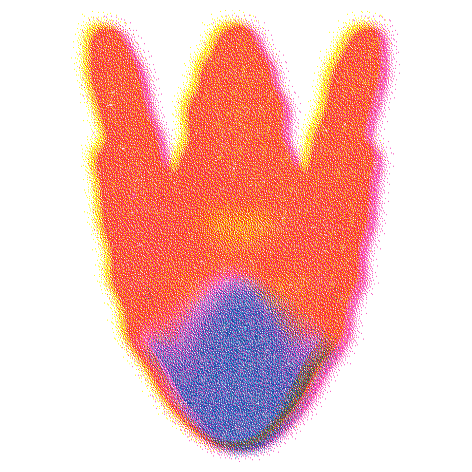
Life Spilling In
Might the soul of architecture reside not in spaces of permanence, but in the gaps through which we pass to get there? Peer through an architect’s eyes as she uses the cafe to reflect on the potency of transitional spaces by drawing on the Japanese concept of ma—the necessary absence that creates potential, beauty, and meaning in the spaces we inhabit and move between.

Published in Standart Issue 42
Going through
On a cool, placid October evening in Zurich—which had been my temporary home for the past two months during a student exchange programme in architecture—I unknowingly stumbled upon the foundation of a new obsession.
Walking along the embankment of the Limmat River with my friend, I felt the shy early stages of a crush. Bundled in too many layers, I was warmly aware of the sound of my new leather Chelsea boots squeaking against the gravel. As we made our way towards his place, we exchanged thoughts on life’s dramatic matters, occasionally switching sides like ribbons in distracted choreography.
We followed the river before veering left onto what appeared to be a shortcut, descending beneath a stone pedestrian bridge. The metal mesh railing on one side tapered off as the space narrowed, converging into a dark vertex. At the very end, an arched opening cut into the wall appeared. ‘It’s really dark,’ I said, mildly alarmed at the thought of entering a tunnel late at night. Reassuring words followed, and we pressed on.
The tunnel was narrow and slightly awkward, with little headroom. When we emerged on the other side, it opened abruptly into a light well, framed by a tall wall that forced a turn. In that compressed space, everything sharpened; sounds echoed, temperatures shifted, and smells intensified. I felt a brief anticipation of someone appearing from the opposite direction, a heightened awareness of my body moving through a place that demanded my attention.
Then, a breath of air—a release from the tension generated by that spatial knot—led to a contrasting iteration of the pre-tunnel scene. The gravel path continued alongside a long concrete facade with imposing staggered floors, draped in climbing shrubs and punctuated by a series of triangular glass doors that rhythmically opened onto… a cafe.
Outside, round, colourful metal tables shared the linear space with a concrete bench marking the boundary between walkway and river. Unlike the previous fragment of industrial land, this was a place where people sat, talked, waited, watched, and jumped into the river. Dogs wove between legs, runners passed through, children improvised their own routes, and bicycles leant where they could. A whole new situation revealed itself through a quirky and slightly uncomfortable passage.

The in-between
That night subtly shifted how I began to perceive space. Over the following weeks, I realized Zurich was filled with passages cutting through buildings—generous voids allowing access to inner courtyards. Technically private yet casually shared, these unofficial shortcuts revealed a quiet city characterised by loiterers, neighbours, smokers, abandoned objects, lush gardens, charming balcony tables, meticulous bin arrangements, and improvised barbecues.
Walking through them became a habit, framing everyday moments rarely seen on facades, and revealing marks of time and use. I began photographing these wanderings with my father’s camera, a heavy, demanding object that enforced slowness and seriousness of intention. What started as a personal record evolved into my master’s thesis on in-between spaces and their influence on experience and atmosphere.
Several transitional typologies emerged as salient: doors, stairs, ramps, corridors, paths, bridges, porticos, marquees, and lobbies. What intrigued me was not just the spaces themselves, but the conditions they create through their slightly unstable existence. And one space that helped me think about and observe how these connections unfold was the cafe.
In architecture, transitional spaces are often treated as secondary. As budgets tighten and dictate design choices, circulation gets rationalized, and effort concentrates on spaces of permanence—the rooms where one is supposed to stay. Stricter regulations also contribute significantly to the standardization of these spaces (‘they don’t do it like they used to!’ goes a common refrain). But I’ve come to believe that the act of passing is just as important as the act of staying. The unofficial shortcuts in Zurich offer proof: a richness of experience emerges from freedom of movement in spaces not fully constrained by efficiency, yet effective in allowing for newness. These in-between spaces connect public and private, inside and outside, individual and collective life. They negotiate shifts in function, comfort, control, mood, and privacy. Without them, architectural space might still function perfectly well in a theoretical sense, but it would feel somehow incomplete.


The architecture of inefficiency
This interest in transitions kept drawing me back to the same quality—the unexpected. Not the spectacular kind, but the subtle unpredictability of shared space, where you don’t, and perhaps shouldn’t, fully control what happens. Architects tend to be mild control freaks, drawing, specifying, rendering, photographing, and curating environments down to the last chair, often presenting architecture as spotless, silent, empty, or populated only by curated objects and blurred figures dissolving into long exposures to maintain the purity of the image. Architecture can attempt to choreograph movement, but it remains, fortunately, inefficient at scripting life. And it is precisely in that inefficiency that something interesting tends to happen.
In his lecture Atmospheres, later published as a book, Swiss architect Peter Zumthor describes a perfect moment while sitting outside a cafe in an arcade facing a square, watching life unfold before him and privately pondering what moves him about the scene:
Everything. The things themselves, the people, the air, noises, sound, colours, material presences, textures, forms too—forms I can appreciate. Forms I can try to decipher. Forms I find beautiful. […] My mood, my feelings, the sense of expectation …
He cites a second example, a photograph of a student cafe, taken by Hans Baumgartner in 1936, as a visual representation of what he means by ‘atmosphere’. He argues that atmosphere cannot be designed directly but rather consists of the harmonious arrangement of certain qualities or conditions that produce a sense of magic—‘the magic of things, […] of the real world’. Among these qualities are material compatibility, the sound of a space, its temperature, the objects that populate it, the way movement is induced by both direction and seduction, the tension between interior and exterior, levels of intimacy, light, and how a building becomes part of its surroundings. In other words, the piece acknowledges that while architecture can set the stage, it cannot control the performance, suggesting that some of the most meaningful spatial experiences happen almost accidentally, when design intention and lived reality overlap.


Caffeinated threshold
Bringing that conversation into everyday life, cafes resemble passages more than destinations. They can serve as short-term stops, pauses, buffers—spaces we pass through on our way to something else, and yet somehow keep returning to, even when that implies staying awhile. They might seduce us to come in, like the frame of a passage, through their openings to the outside world. We enter them half-awake, often caught between obligations and mentally different versions of ourselves. Revolving doors, wind-blockers, the dynamic around ordering at the counter, noticing aromas and sounds while waiting, balancing a coffee cup and spoon precariously on the saucer, and choosing the ideal spot all work as small devices of transition, subtly resetting our pace. A shift in mood. Like those interstices, they heighten awareness by placing us in a temporary state. Drinking an espresso, if you think about it, is not that different from walking through the tunnel by the river—a short, contained, bitter transition that takes you from a slightly awkward in-between state to re-emerging with a bit more alertness and orientation, stepping onto the same sidewalk with a renewed sense of purpose and direction.
From a functional standpoint, cafes can be remarkably pragmatic spaces. Coffee needs to be brewed efficiently, queues must flow, and counters must turn over. But what makes us choose one cafe over another is rarely just efficiency. It’s often something harder to define: a corner table that feels protected without being isolating, the way the door hesitates before closing, or the barista who remembers nothing about you except your usual order. This aligns with Zumthor’s description of our immediate, almost instinctive perception of atmosphere—a sensitivity that doesn’t require architectural training. The nuance often lies in the careful tuning of space to allow for small deviations from the expected.
There’s a concept in Japanese spatial thinking called ma (‘gap, space, pause’), often translated as negative space, emptiness, or interval, though this falls short of its full meaning. Ma describes absence as the loaded, necessary distance that allows relationships to exist. It is the silence that gives rhythm its structure, the pause that allows what follows to register. Viewed through this lens, the river tunnel in Zurich was not just a passage, but a moment of compression generating tension and anticipation. When it opens onto the river and the café beyond, that release is felt more acutely because of what preceded it. The tunnel does not merely prepare the experience; it actively participates in it, establishing a tension that makes release meaningful. In this way, ma offers an alternative to architectural thinking that treats spaces as singular, autonomous objects, insisting instead on continuity and the productive tension of what happens in between.

Cafes are rich in this kind of productive, available emptiness. They derive their sense of place from what surrounds them, framing the street, absorbing fragments of weather, movement, and noise, and giving them back slightly edited. A good cafe is never fully complete without the outside. It negotiates openness and enclosure, allowing participation without commitment. You can stay for hours or leave after five minutes, and both choices feel equally legitimate.
It’s often from this position—not fully in and not fully out—that people-watching begins almost unintentionally. Read through ma, this state is not incidental but spatial—a condition in which attention loosens and shifts outward. You are present but not required to perform. In this gap, observation becomes possible, along with a reminder of how limited any architectural script ultimately is. No matter how carefully a space is drawn, specified, or photographed, life exceeds it. People arrive late, linger, spill things, move chairs, and interrupt one another. You begin to notice patterns, how bodies negotiate space, what people carry, and where the light lands. None of this is urgent, and none of it can be fully anticipated. For me, this has become a gentle but persistent critique of architectural habits that privilege control and visual resolution above all else. Architecture is not a closed system, and perhaps it shouldn’t aspire to be. Cafés, like in-between spaces, make this especially evident. They do not demand completion or mastery; they allow architecture to function as a stage that accommodates the unpredictable, slightly messy, very human moments that no drawing ever quite accounts for.
And perhaps that’s why imperfections matter so much here. A chipped cup, a sticky table, a layout that forces a small detour—such details suggest that space is lived and shaped over time through use rather than frozen at the moment of design. Beyond that, imperfection is often more memorable than perfection. Architecture, at its best, doesn’t seek to eliminate unpredictability, but instead leaves enough room for it, much like a good conversation.
The cities and towns in which we live don’t need more perfectly scripted facades; they needs more transitions, face-to-face interaction, and present, permeable spaces. So perhaps the most rebellious thing an architect can truly do is to stop obsessing over the sterile purity of the render and embrace a dark vertex, a generous void, a moment of ma—just conceptually spacious enough to let life spill in.
Keep reading
Become a reader—from $60/year
A membership helps us stay independent, create a whole range of stories across our different platforms, and continue to invest in creative community we work with.
Join Standart Already a reader? Log-in here.
Explore more stories

Rachel Apple is a Cup of Excellence Head Judge, photographer, and co-founder of Raise the Bar, a community and education platform for specialty coffee professionals. She loves bin diving for vinyl,...
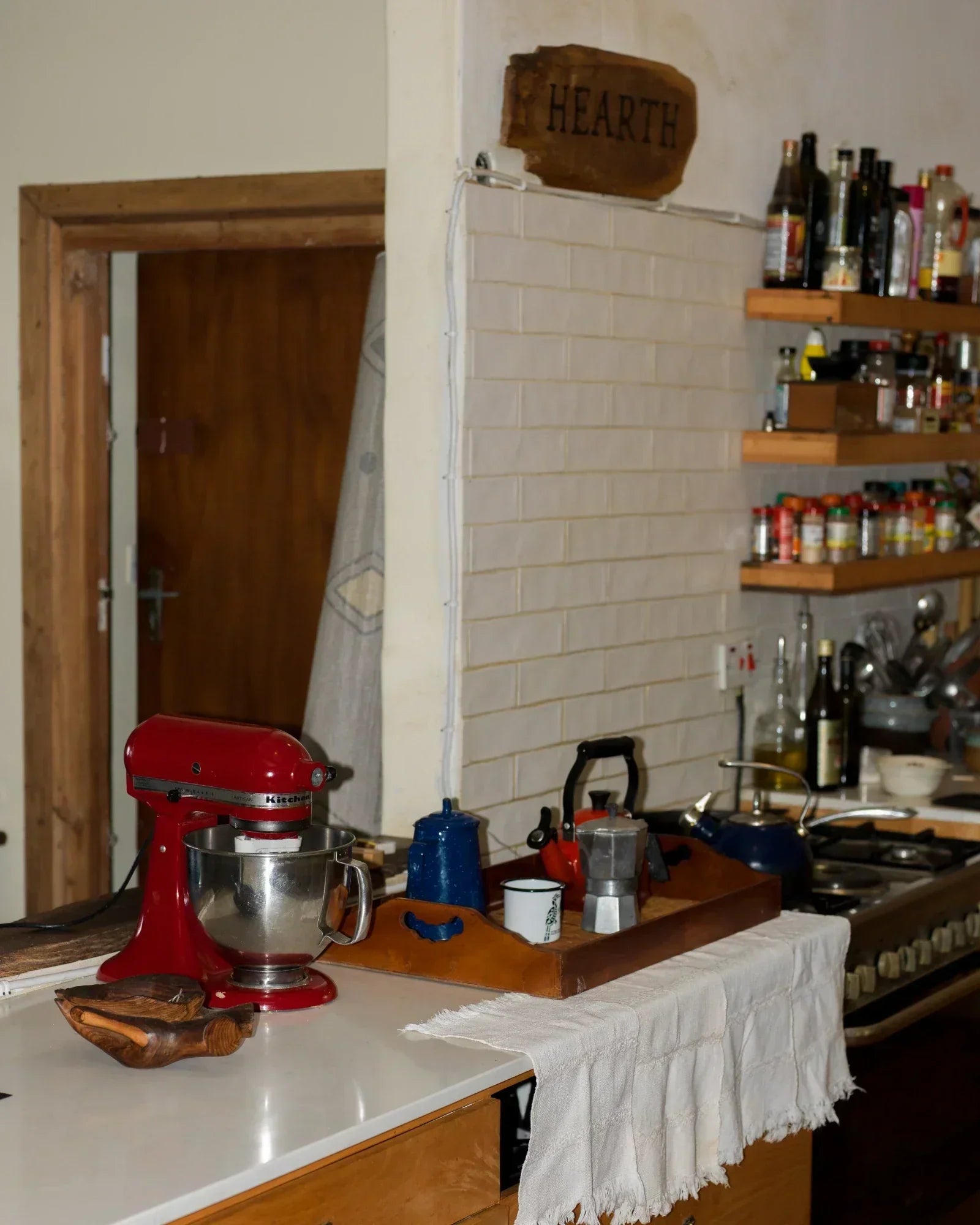
As the sun set in Zimbabwe’s lush Honde Valley, I watched kids push car tyres up and down the street, racing each other through the village. In Africa, most often, less is more. People are used to ...

Los Angeles resists clean outlines, and its coffee culture lives somewhere between softness and grit. Built from migration, precarious work, and long-standing food traditions, it moves at uneven te...

Tinashe Nyamudoka, founder of Kumusha Wines and Kumusha Coffee, is more than a world-class sommelier; he is a symbol of how wine, culture, and competition can challenge global narratives about tast...

When exploring foreign lands, few feelings compare to the triumph of discovering something known only to locals. Realizing these euphoric moments requires a healthy pinch of boldness, however; one ...
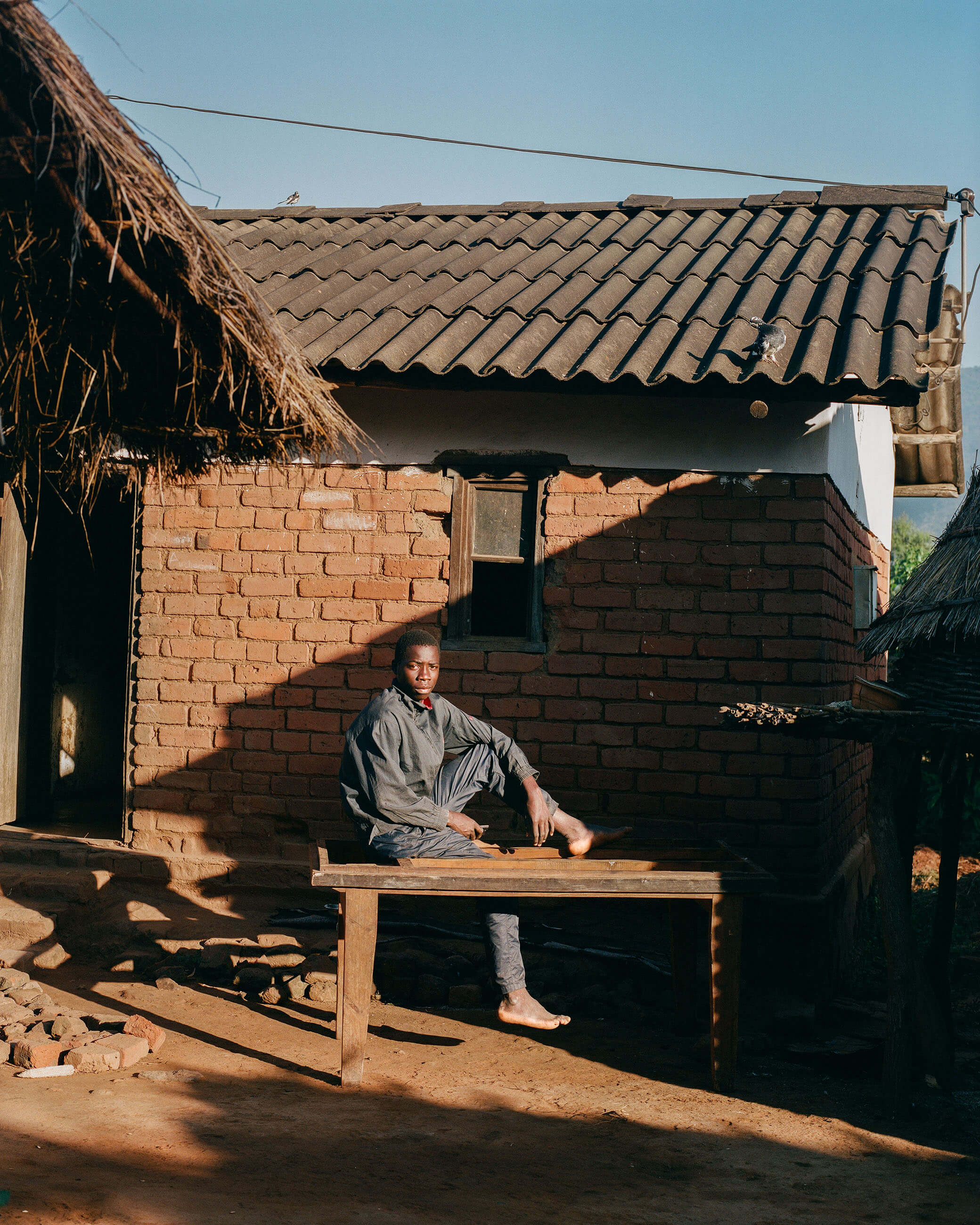
Some coffee origins are still in the process of becoming. Malawi is one of them—a place where potential feels tangible even if not fully realized. Farmers are steadily shaping a future for their co...

Blue-sky ski days to negroni nights, Hakuba is a 24-hour town hidden in the Japanese highlands. From the staunch octogenarian locals fiercely guarding their old traditions, to the young crowd of mu...
In recent years, matcha has become one of the most popular drinks ordered and enjoyed in cafes around the world. But with its growing popularity, several issues have also emerged, ranging from a la...

As coffee grew cheaper in 18th-century Europe, it spread beyond the elite, alarming German rulers. In Prussia, Frederick the Great saw it as a threat to order, economy, and authority. His efforts t...

Valtteri Bottas is a known quantity at Standart, being as he is a past interviewee and co-owner of Finnish roastery Kahiwa. He moves quickly, and not only when he’s piloting an earthbound rocket ar...