Zimbabwe

Balanced and smooth, with quiet complexity—this is how Zimbabwean coffee is often described, and it mirrors the crop’s history: fragile, interrupted, but resilient. Coffee here is more than just a crop; it is tied to violent colonial histories, survival strategies in times of crisis, and economic volatility. To understand Zimbabwean coffee is to confront the country’s turbulent political economy and trace how a crop once on the brink of disappearance is finding new life among a younger generation.
From settler estates to independence
Coffee was introduced to Zimbabwe, then the British Crown colony of Southern Rhodesia, at the turn of the 20th century as settler farmers sought export crops suited to the cool, high-altitude conditions of the Eastern Highlands. Alongside tea, timber, macadamia, and tobacco, coffee established a presence on the large commercial farms owned by white settlers, particularly in Chipinge and the Honde Valley.
By the middle of the century, coffee production was firmly integrated into Rhodesia’s racially stratified agricultural economy and its unequal land tenure system. The Land Apportionment Act of 1930 largely excluded Africans from prime agricultural lands, reserving fertile highlands for white farmers while relegating black Zimbabweans to overcrowded Tribal Trust Lands. Settler estates, often several hundred hectares in size, had access to irrigation, credit, and export channels. Under these inequitable conditions, coffee production, like that of tobacco, yielded relatively small but high-quality volumes for export.
By the late 1970s, Rhodesian coffee had garnered a reputation abroad for its balanced acidity and clean flavours. However, it was grown within a narrow, estate-driven economy that perpetuated racial inequality and was underpinned by a white-minority regime.

Independence and early reforms
With Zimbabwe’s independence in 1980, a new era of potential emerged. Coffee, along with other export crops, initially benefitted from state support. In the 1980s, the government provided subsidies, extension services, and price incentives to encourage production. This initiative was part of a broader effort to stabilize rural livelihoods and expand commercial agriculture among smallholders. Coffee cultivation was promoted in the Honde Valley, a lush mountainous region in Zimbabwe’s Eastern Highlands bordering Mozambique, as part of a strategy to diversify away from maize and subsistence crops.
This period was characterized by contradictions. On one hand, Zimbabwe’s agricultural sector thrived, and the country became a regional breadbasket. On the other hand, structural inequalities persisted: large-scale commercial estates continued to dominate high-value crops like coffee, while smallholders were often restricted to lower-quality land.
The late 1980s and 1990s ushered in further turmoil. Zimbabwe, like many African countries, was subjected to structural adjustment programmes imposed by the IMF and World Bank. These reforms aimed to liberalize markets, reduce state subsidies, and expose the economy to global competition. However, for coffee farmers, this meant the withdrawal of state support just as global coffee prices were entering a downturn. The liberalization era eroded the safety nets that had previously supported both emerging smallholders and established estates.
‘The abrupt collapse of commercial agriculture wreaked havoc on the economy, [...] forcing farmers to navigate a landscape of barter, informal trade, and desperate improvization.’
Land reform and the collapse of coffee
The turning point for Zimbabwe came in 2000 with the launch of the Fast-Track Land Reform Programme (FTLRP). In response to growing political opposition, the government intensified land seizures from white commercial farmers, redistributing millions of hectares to Black Zimbabweans.
Land reform had long been a key political promise in Zimbabwe. After gaining independence in 1980, the Lancaster House Agreement imposed a 10-year moratorium on compulsory land acquisition, allowing redistribution only on a ‘willing buyer, willing seller’ basis, and by the late 1990s, progress had been painfully slow. Around 70,000 smallholders had been resettled, yet the majority of prime agricultural land remained with about 4,500 white farmers, who controlled some 11 million hectares. For many rural Zimbabweans, independence had failed to deliver meaningful land justice.
The FTLRP changed this situation dramatically, but not without significant upheaval. Starting in 2000, groups of guerilla fighters occupied white-owned farms in chaotic and violent invasions. What began as loosely organized occupations quickly escalated into state policy: President Robert Mugabe announced that five million hectares would be seized without compensation and redistributed. In practice, the programme expanded to over ten million hectares, fundamentally altering Zimbabwe’s agrarian landscape.

The international response was swift and severe. The UK government, led by Prime Minister Tony Blair, condemned the land seizures as illegal and suspended development support. The European Union imposed targeted sanctions on Zimbabwe’s political elite, while the United States enacted the Zimbabwe Democracy and Economic Recovery Act (ZDERA) in 2001, restricting access to multilateral lending. As a result, Zimbabwe became increasingly isolated from international financial systems, exacerbated by the collapse of its agricultural export earnings.
For many Zimbabweans, the FTLRP represented both liberation and disaster. Land that hasd long been concentrated in the hands of a settler minority was finally returned to Black farmers, fulfilling a long-standing demand of the liberation struggle. However, the process was deeply politicized, often benefitting ruling-party insiders and military elites rather than the landless poor. The abrupt collapse of commercial agriculture wreaked havoc on the economy, leading to significant declines in tobacco, horticulture, and coffee exports. Hyperinflation ensued, with prices doubling in hours and banknotes denominated in trillions. Food shortages and mass emigration followed, forcing farmers to navigate a landscape of barter, informal trade, and desperate improvisation.


Coffee was especially vulnerable during this upheaval. Estates that had once been the backbone of production were dismantled, and processing mills and irrigation systems were abandoned. Many of the new landholders lacked both experience in coffee and the resources necessary to maintain capital-intensive farms. Consequently, production plummeted. Unlike maize or sorghum, which new farmers could plant immediately for subsistence, coffee requires years of investment before it yields a harvest. It needs irrigation, fertilizer, pest management, and a functioning processing chain. Amid the chaos, the entire system disintegrated. Zimbabwe’s annual coffee production, which had peaked at over 15,000 tonnes in the late 1980s, fell to under 300 tonnes by the mid-2000s. In many areas, coffee was entirely uprooted in favour of quicker-return crops such as maize, sugarcane, and bananas. The national Coffee Growers’ Association disbanded, extension services vanished, and research stations closed. Once celebrated on specialty menus across Europe, Zimbabwean coffee effectively disappeared from the global stage.
‘The revival of the coffee industry from its near-total collapse offers a chance to reshape coffee with a new vision.’
Even after the introduction of the US dollar as legal tender in 2009 stabilized inflation, currency volatility has persisted. Today, coffee farmers are still paid in a mix of US dollars and local Zimbabwean currency. Like in much of the coffee producing world, payments often arrive months after harvest; farmers we spoke with noted that they deliver their coffee in September but do not receive payment until February or March. This delay, coupled with the constant threat of economic instability and currency fluctuations, makes coffee a high-risk livelihood compared to other local cash crops like bananas or sugarcane, which are purchased on the spot.
As we sat in a village square one late morning after visiting several coffee farms on a steep hillside, local farmers carried in stacks of sugarcane stalks. A truck pulled up, complete with scales, and the staff began weighing the cane, purchasing it and paying each farmer in cash—immediately. The villagers used this cash for urgent household needs, walking across the square to the one small shop. In contrast, coffee demands patience and trust in institutions that have so often failed.

Resilience and new directions
The legacy of the FTLRP continues to shape Zimbabwe’s coffee sector today. The large estates that once characterized the industry are mostly gone, replaced by a patchwork of smallholders and a handful of new entrepreneurs. Infrastructure gaps like broken irrigation systems, collapsed mills, and lost export networks still hinder recovery, but there is also a sense of renewal. Previously inaccessible land is now cultivated by local farmers, and younger Zimbabweans are rediscovering coffee as a crop with potential. Although this revival remains fragile, it is rooted in profound political and social transformation.
Coffee’s comeback is tied to new entrants. Sebastian Maseko, owner of Zimunda Estate, illustrates this trend. With an international IT career that had him traversing Europe, he would return home to Zimbabwe to relax. The land that is now Zimunda was a favourite retreat; when his friend wanted to sell, Sebastian moved back permanently. He hadn’t intended to become a full-time coffee farmer: there were long-abandoned trees on the land, and he initially focused on growing enough for his own morning brews while sitting on his veranda, overlooking the morning mists. Today, he is part of a small but determined network working to restore Zimbabwe’s reputation for quality.

Tinashe Nyamudoka came to coffee almost by accident after working as a sommelier. As a child, he visited his grandmother, who grew coffee among bananas and sugarcane. Coffee was never central to daily life—‘they drank more tea than coffee,’ he recalls—but the plants persisted, tended mainly by older women who kept the tradition alive. Years later, while working at a fine-dining restaurant in South Africa, he was challenged to improve the coffee program. He began learning from a nearby roastery, studying origins and profiles, and was struck by images of smallholders abroad. ‘“Wait a minute,” I thought. I wanted to know more about my own connection to this. Then I picked up the phone. “Grandma, are you still growing coffee?”’
A visit home in 2018 revealed both promise and challenges. His grandmother’s coffee had strong flavour potential but also many defects, grown under limited resources and ageing plants. Nyamudoka recognized the importance of cultivar and farming practices. Where Zimbabwe had long relied on disease-resistant varieties like catimor, the global specialty stage was now passionately discussing varieties like gesha and SL28. He began experimenting, planting thousands of new trees in 2019, determined to position Zimbabwe as part of the global conversation.
‘Rather than existing farms slowly pivoting to specialty, the need for either entirely new farms or intensive rehabilitation means a specialty orientation is being baked into the nascent coffee industry.’
At first, his efforts focused on helping his grandmother: buying her beans, selling them, and channelling a share back to her. After her passing, he took over her fields and expanded. Soon, neighbouring farmers asked him to market their beans as well. ‘The next time I went there, I had the whole village of grandmas waiting for me,’ he explains. Nyamudoka’s project blends entrepreneurial energy with a deep respect for place. From his background in wine, he understands that no single country is ‘the best,’ only unique. ‘Right now, I don’t want to say, “Look at Zimbabwe now; out of the ashes we make the best coffee.” No. I just want Zimbabwe to be part of the world’s coffee conversation again.’
Still, many younger Zimbabweans have little interest in growing coffee, associating it with hard labour and poor pay. For Nyamudoka, making coffee ‘fashionable’ and aspirational is key: sharing knowledge online, planting visibly, and showing that coffee can link local heritage to global markets and craft connoisseurship.

Zimbabwe’s specialty future
Zimbabwe’s broader political economy continues to weigh heavily on coffee. Land remains contested, with tenure security uncertain for many smallholders. Currency instability and inflation complicate long-term investment. Export markets are thin, and without strong branding, Zimbabwe struggles to recapture international attention.
Though challenges lie ahead, unique opportunities exist. The revival of the coffee industry from its near-total collapse offers a chance to reshape coffee with a new vision. The rebuilding is being led by a group of young, passionate individuals, aware of the mature global specialty coffee industry, and eager to engage from the outset. Much of the specialty coffee action is driven by a wave of people returning home after initially leaving during the difficult years of hyperinflation and political unrest. Examples like Sebastian and Tinashe reflect a desire to see their country succeed and to invest the knowledge and resources they’ve gained abroad back into their communities.
Having developed an appreciation for specialty coffee culture internationally, many of the new movers in Zimbabwean coffee are approaching it with a specialty mindset from the start. Rather than existing farms slowly pivoting to specialty, the need for either entirely new farms or intensive rehabilitation means a specialty orientation is being baked into the nascent coffee industry.
The specialty potential of Zimbabwe is attracting foreigners too. Charlie Pass of African Sky Coffee, a South African now based in Harare, hopes that ‘more small-scale farmers will start to see the benefits of growing coffee again.’ But for this to happen, farmers must first ‘have access to capital to invest in the growing process. Ultimately, it comes back to rebuilding the infrastructure: forming cooperative washing stations, efficient mills, and market groups.’

There is still much work to be done, but opportunities are bubbling up. Government incentives for crops like coffee and macadamia hint at recognition of their export potential. International NGOs and buyers are starting to show interest in rehabilitating production. The specialty market offers a chance for Zimbabwe to re-emerge.
For those who encounter it, Zimbabwean coffee can be quietly revelatory. Its best lots are balanced, layered, with subtle fruit notes. In the global specialty world, it remains rare, a rediscovered gem. It was this steady, beautiful nature of Zimbabwean coffees that drew Pass to move to Zimbabwe, where he dreams of helping to ‘put Zimbabwe back on the map as one of the world’s most balanced single origins.’
Zimbabwean coffee, like the country itself, has endured rupture, loss, and hardship. Its survival is testament to resilience. Its re-emergence is not just a matter of taste, but of history, politics, and the stubborn determination of farmers, entrepreneurs, and visionaries who believe that this crop, despite everything, still belongs to Zimbabwe’s future.
Keep reading
Become a reader—from $60/year
A membership helps us stay independent, create a whole range of stories across our different platforms, and continue to invest in creative community we work with.
Join Standart Already a reader? Log-in here.
Explore more stories

Rachel Apple is a Cup of Excellence Head Judge, photographer, and co-founder of Raise the Bar, a community and education platform for specialty coffee professionals. She loves bin diving for vinyl,...
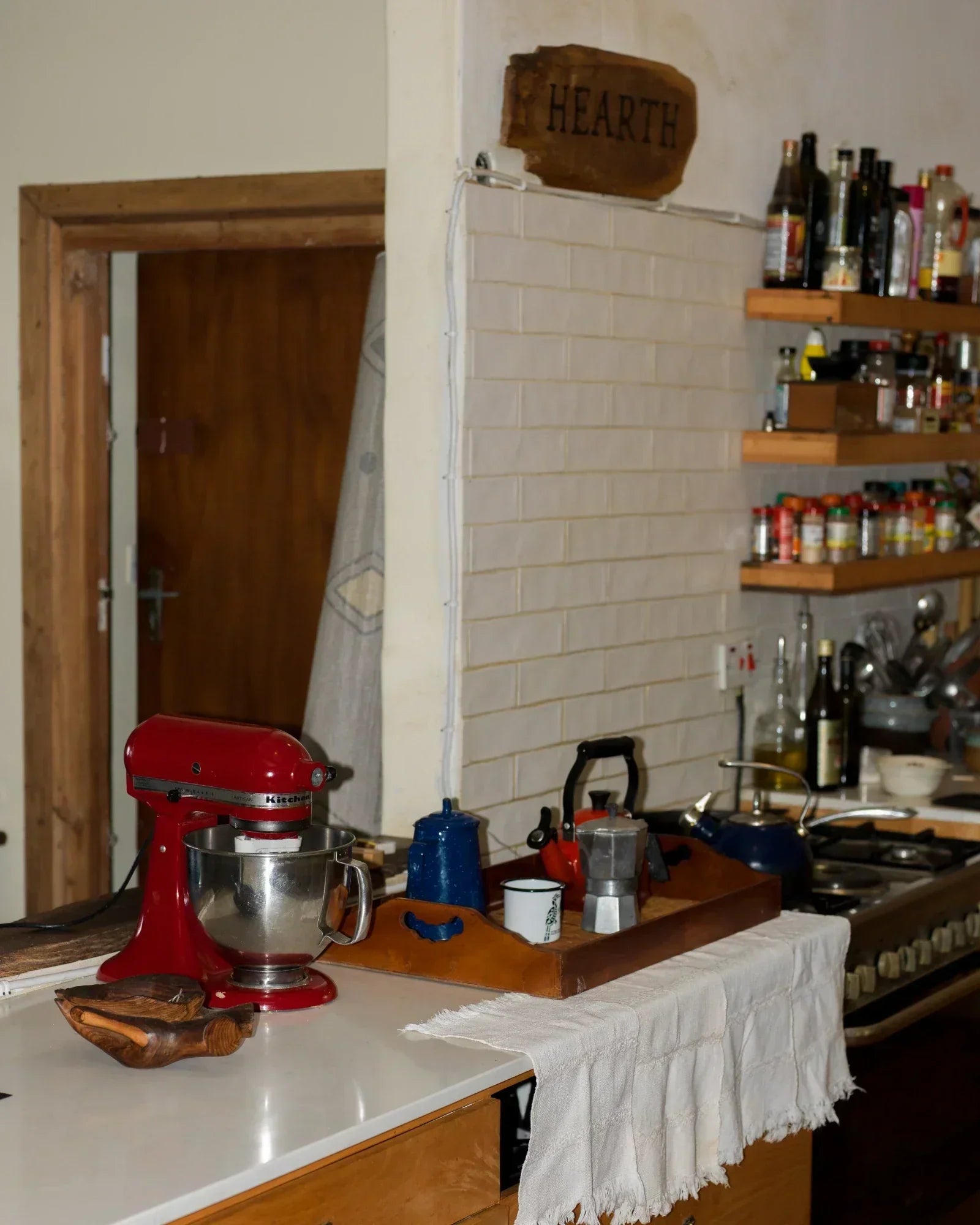
As the sun set in Zimbabwe’s lush Honde Valley, I watched kids push car tyres up and down the street, racing each other through the village. In Africa, most often, less is more. People are used to ...

Los Angeles resists clean outlines, and its coffee culture lives somewhere between softness and grit. Built from migration, precarious work, and long-standing food traditions, it moves at uneven te...

Tinashe Nyamudoka, founder of Kumusha Wines and Kumusha Coffee, is more than a world-class sommelier; he is a symbol of how wine, culture, and competition can challenge global narratives about tast...

When exploring foreign lands, few feelings compare to the triumph of discovering something known only to locals. Realizing these euphoric moments requires a healthy pinch of boldness, however; one ...
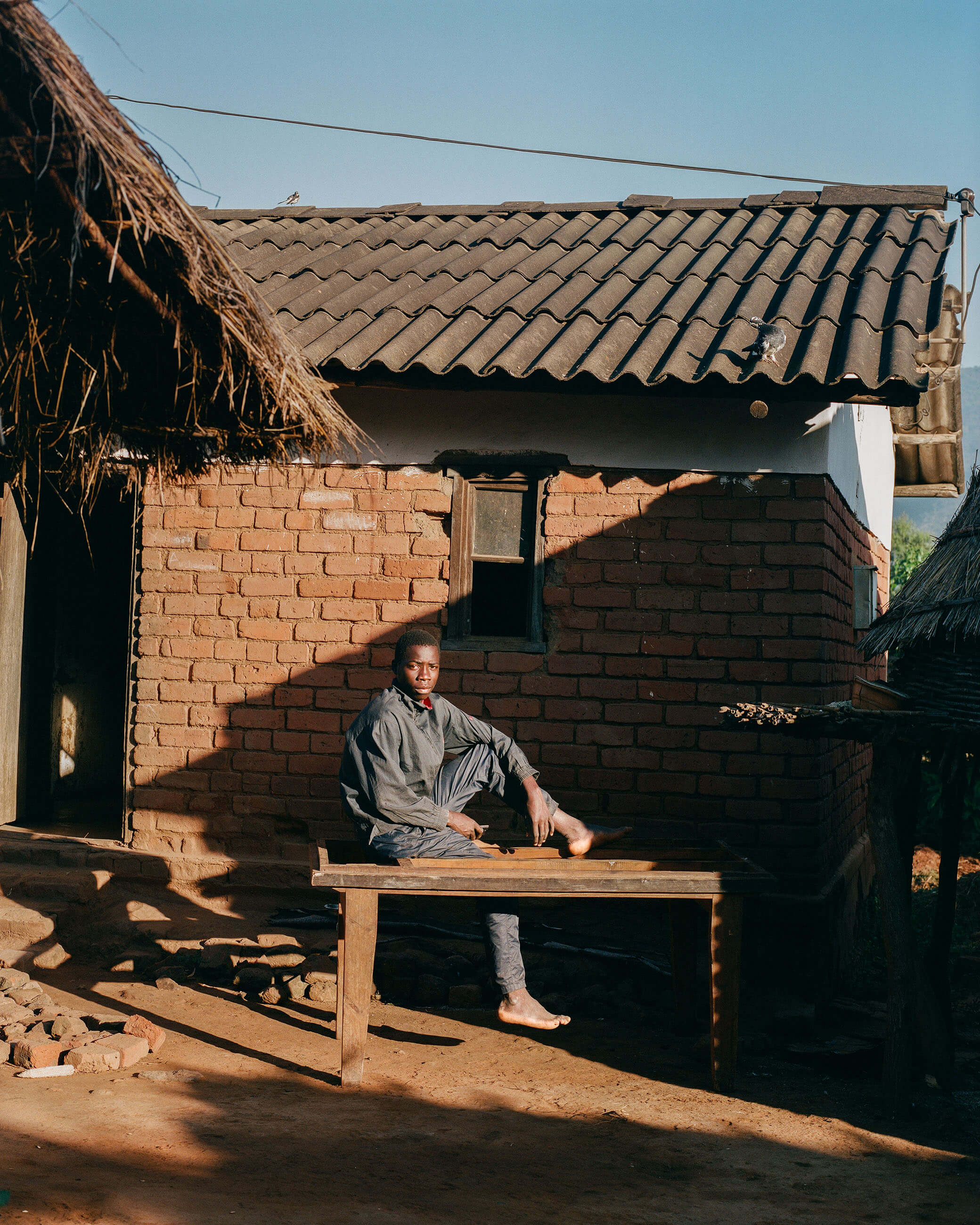
Some coffee origins are still in the process of becoming. Malawi is one of them—a place where potential feels tangible even if not fully realized. Farmers are steadily shaping a future for their co...

Blue-sky ski days to negroni nights, Hakuba is a 24-hour town hidden in the Japanese highlands. From the staunch octogenarian locals fiercely guarding their old traditions, to the young crowd of mu...

In recent years, matcha has become one of the most popular drinks ordered and enjoyed in cafes around the world. But with its growing popularity, several issues have also emerged, ranging from a la...

As coffee grew cheaper in 18th-century Europe, it spread beyond the elite, alarming German rulers. In Prussia, Frederick the Great saw it as a threat to order, economy, and authority. His efforts t...

Valtteri Bottas is a known quantity at Standart, being as he is a past interviewee and co-owner of Finnish roastery Kahiwa. He moves quickly, and not only when he’s piloting an earthbound rocket ar...