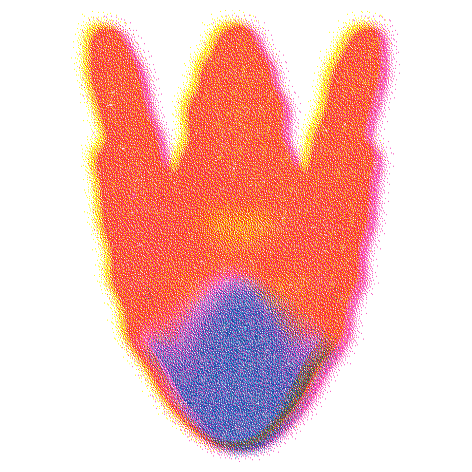
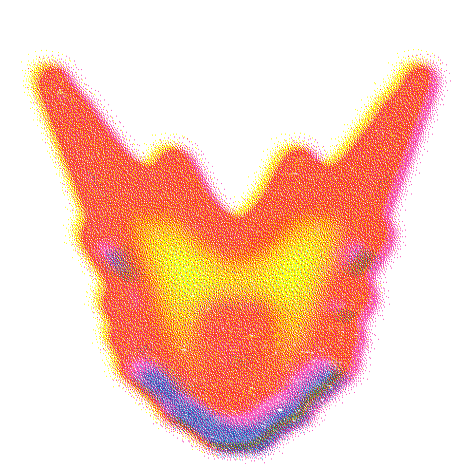
Coffee grinding has long been a game of trade-offs. Faster grinding meant higher heat. Low retention often came at the expense of grind consistency. Baristas and roasters had to choose their battles, adjusting their techniques to compensate for a grinder’s limitations. But what if they didn’t have to?
Join us for a conversation with the team behind Ceado, a proud partner of Standart.
Based on Ceado’s previous grinder lineup, how did the development of the REV Series take shape on a practical level? What did the R&D process look like from early ideas and prototypes through to the final product?
The REV Series is the embodiment of many ideas Ceado has developed over the years but deliberately kept “in the drawer” until the right moment. Compared to its overall workforce, Ceado has a relatively large and highly structured R&D department that continuously carries out research and produces innovation on a regular basis. Some of this research immediately becomes part of commercial products; some of it remains unused for years, waiting until it can meaningfully contribute to solving a real problem.
'Grinding is generally the area of the coffee workflow where the greatest margins for improvement still exist, and it is also where we expect the strongest technological growth in the future.'
A clear example is the use of load cells to weigh ground coffee. Ceado had already developed this technology more than ten years ago, but at the time the market was not yet ready, and the need for gravimetric control on grinders was far less evident than it is today. The same applies to our Sweep-Out innovation, which has been part of Ceado grinders since 2018.
When developing the REV Series, however, we consciously shifted our focus away from individual features and towards the benefits those features should deliver. Rather than asking “what technologies can we add?”, we asked “what problems do baristas actually face when using a grinder, and what needs, aspirations, and flavour goals do they have?”.
Conceptually, the REV Series were designed as a family of grinders that address different flavour needs within a café. They can be seen as three parallel production lines that a barista can use intentionally to define and shape the flavour profile of the coffee.
Naturally, REV grinders are built to maximise cup quality. This is why they integrate a wide range of technologies developed over many years—some already in use, some previously set aside—combined into a holistic approach to grind control: control of ground coffee temperature, dose weight, retention, and particle size distribution.
What made Ceado decide that incremental improvements were no longer enough, and how did you validate that a system-level rethink of the grinder could deliver meaningful improvements in flavour and consistency for the wider coffee industry?
Incremental improvement is something Ceado regularly applies to products that are already on the market, based on feedback from users and customers. This type of innovation typically improves the user experience of an existing technology. In our internal thinking, however, we clearly distinguish between incremental innovation and true invention.
A useful analogy is automotive safety: the person who invented the airbag introduced an entirely new system to protect drivers, while someone who added twelve airbags to a car was still innovating—but in a different way. Both are valuable, but they are fundamentally different approaches.
With the REV Series, we wanted to respond to a need that had not yet been fully addressed by anyone. We realised that weight control alone is not sufficient to guarantee consistency of flavour extraction. To truly achieve that goal, multiple parameters must be actively controlled at the same time. Up until then, even our own grinders—and those available on the market—could manage, at best, one or two of the parameters required to ensure consistent results in the cup while reducing waste.

To this, we added the knowledge we have accumulated over many years regarding burr geometry and its influence on flavour development. This led us to design burr sets that specifically enhance iced beverages, others that improve tactile perception and mouthfeel in milk-based drinks, and others that maximise flavour clarity—especially when paired with high-quality coffees.
Historically, grinder design has involved trade-offs, with improvements in one area often creating challenges in another. When developing Rev Series, which compromises were the hardest to eliminate, and why?
Grinding is generally the area of the coffee workflow where the greatest margins for improvement still exist, and it is also where we expect the strongest technological growth in the future. Espresso machines have become extremely precise in terms of temperature and pressure control, and this precision has highlighted how variable grinders still are. Today, there are dozens of excellent espresso machines capable of extracting coffee within extremely tight parameters, and this has only made the limitations of traditional grinders more evident.
As mentioned earlier, many grinders have historically prioritised the control of certain physical aspects of grinding that indirectly influence flavour, while neglecting others. With the REV Series, Ceado made very few compromises. Our goal was to address flavour optimisation in a holistic way, offering a set of tools that are intuitive to use and that significantly reduce waste.
That said, trade-offs do exist even in our case. Cost is always linked to how far we want to push effectiveness. For example, it would be technically possible to also control humidity, but doing so would require creating an isolated environment around the grinder to shield it from external conditions. This would dramatically increase costs, which is why such a solution has not been implemented so far.
There are also trade-offs related to accessibility and speed. Some cafés prioritise very high grinding speed, others need a more approachable price point. This is precisely why we developed three products within the REV Series: one that prioritises speed (REV Titan), one that prioritises accessibility and cost (REV Steel), and one that focuses on maximum cup quality (REV Zero)—accepting a slight reduction in speed, while still remaining very fast by industry standards.
By actively controlling temperature, retention, and grind stability, the need for constant adjustment is reduced. How does this change the way baristas and roasters approach recipe development and service?
REV Zero, which actively controls all four key parameters (control of ground coffee temperature, dose weight, retention, and particle size distribution), responds much more immediately than traditional grinders. Because there is almost no coffee left between the burrs, it eliminates the adjustment delay typical of conventional designs. In standard grinders, even after changing grind size, the new setting mixes with the coffee already present between the burrs, often requiring three or four doses before the desired particle size is fully achieved.
By eliminating retention, the desired grind size is achieved from the very next shot. This dramatically reduces waste and, at the same time, ensures that around 90% of the dose consists of freshly ground coffee, rich in CO₂ and volatile compounds that contribute directly to flavour. As a result, it is often possible to slightly reduce the dose compared to traditional grinders with higher retention, while still achieving a better cup quality. The grind size may need to be tightened very slightly, but the result is a sweeter cup, a longer-lasting aftertaste, and flavours that are easier to articulate and distinguish.
On average, a café using more than four kilos of coffee per day wastes between 400 and 800 grams daily. Even taking the lower figure of 400 grams—accounting for morning setup and multiple grind adjustments during the day—this quickly adds up. Assuming the café is open 25 days per month, that means roughly 10 kilos of coffee wasted every month, or 120 kilos per year.
To put this into perspective, an average Colombian coffee farm produces around 30 bags of green coffee per harvest, each weighing 60 kilos—about 1.8 tonnes in total. After roasting, this is reduced by roughly 30%, leaving around 1,200–1,300 kilos of roasted coffee. If 10–11 cafés each waste 120 kilos per year, they collectively waste the equivalent of an entire farm’s annual production.
This is the concrete, real-world impact that our technology brings to the market.
Learn more about Ceado in Standart and on their website.
Explore more stories

Rachel Apple is a Cup of Excellence Head Judge, photographer, and co-founder of Raise the Bar, a community and education platform for specialty coffee professionals. She loves bin diving for vinyl,...
As the sun set in Zimbabwe’s lush Honde Valley, I watched kids push car tyres up and down the street, racing each other through the village. In Africa, most often, less is more. People are used to ...

Los Angeles resists clean outlines, and its coffee culture lives somewhere between softness and grit. Built from migration, precarious work, and long-standing food traditions, it moves at uneven te...
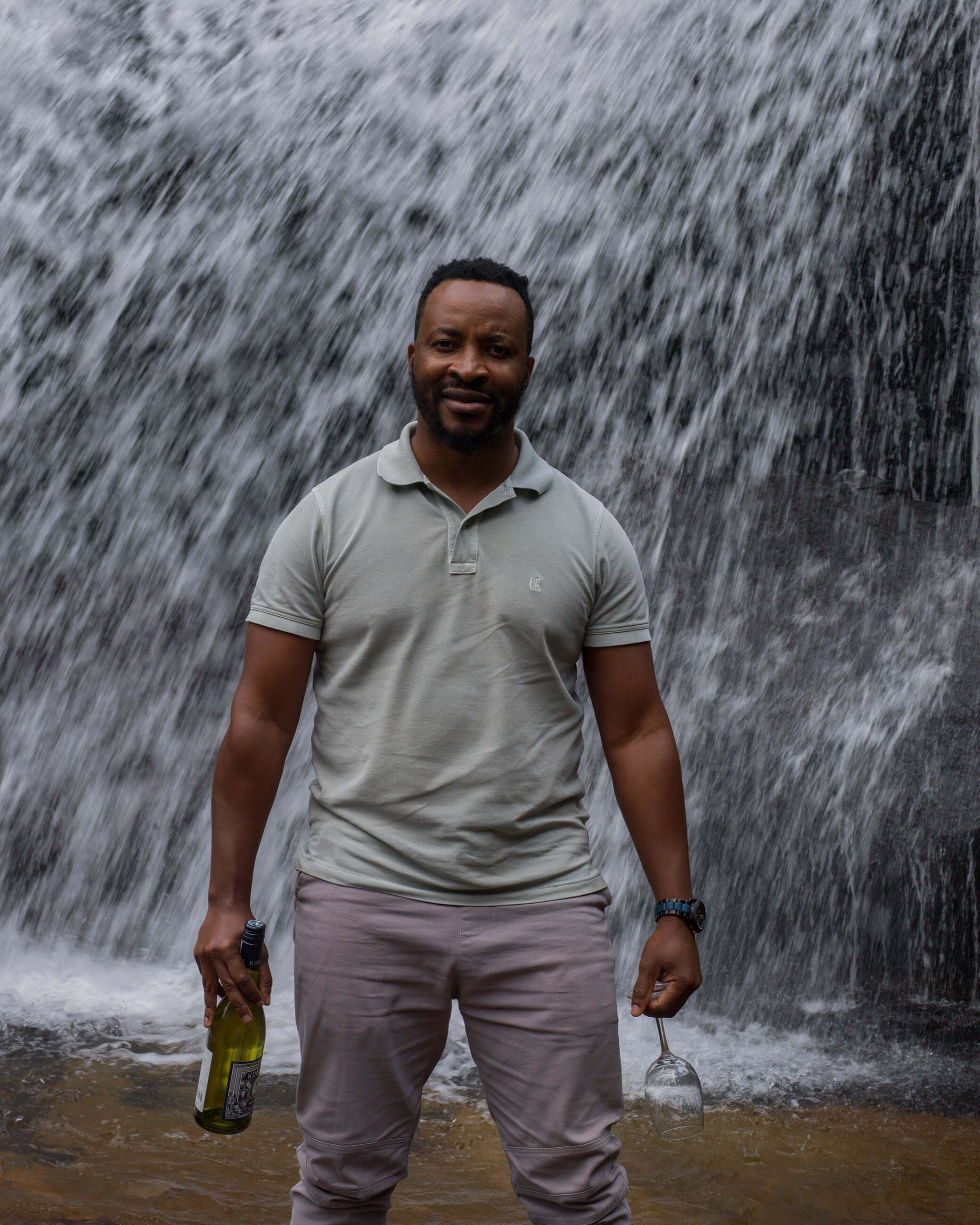
Tinashe Nyamudoka, founder of Kumusha Wines and Kumusha Coffee, is more than a world-class sommelier; he is a symbol of how wine, culture, and competition can challenge global narratives about tast...

When exploring foreign lands, few feelings compare to the triumph of discovering something known only to locals. Realizing these euphoric moments requires a healthy pinch of boldness, however; one ...
Some coffee origins are still in the process of becoming. Malawi is one of them—a place where potential feels tangible even if not fully realized. Farmers are steadily shaping a future for their co...

Blue-sky ski days to negroni nights, Hakuba is a 24-hour town hidden in the Japanese highlands. From the staunch octogenarian locals fiercely guarding their old traditions, to the young crowd of mu...
In recent years, matcha has become one of the most popular drinks ordered and enjoyed in cafes around the world. But with its growing popularity, several issues have also emerged, ranging from a la...

As coffee grew cheaper in 18th-century Europe, it spread beyond the elite, alarming German rulers. In Prussia, Frederick the Great saw it as a threat to order, economy, and authority. His efforts t...

Valtteri Bottas is a known quantity at Standart, being as he is a past interviewee and co-owner of Finnish roastery Kahiwa. He moves quickly, and not only when he’s piloting an earthbound rocket ar...